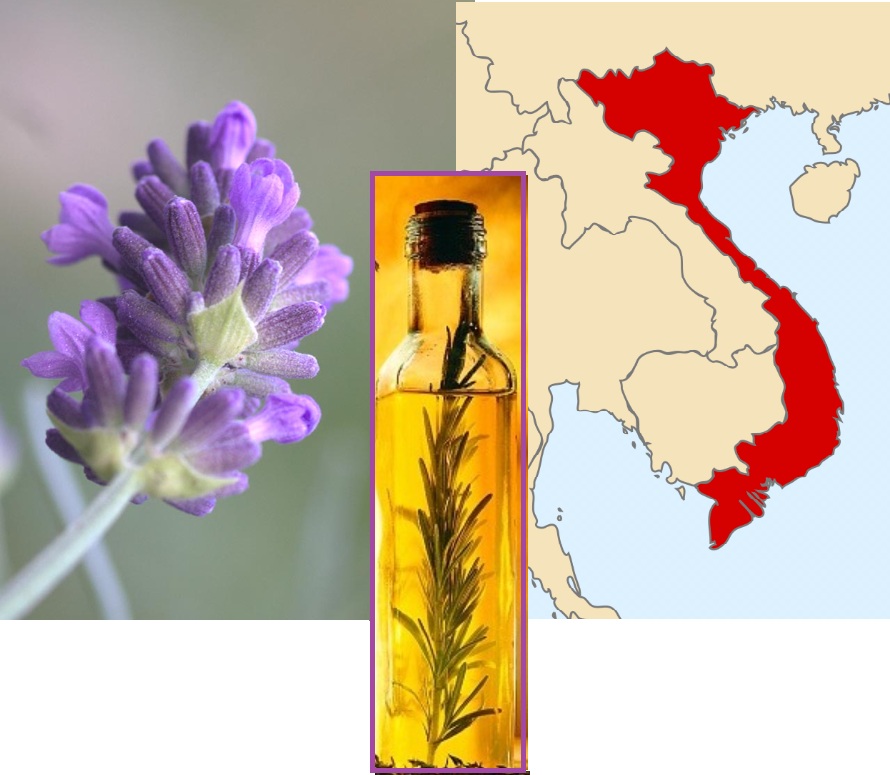
ESSENTIAL OIL OF LAVENDER FLOWERS (LAVANDULA ANGUSTIFOLIA MILL.) FROM LAM DONG, VIETNAM: CHEMICAL COMPOSITION AND BIOLOGICAL ACTIVITIES
DOI:
https://doi.org/10.15421/jchemtech.v33i4.330919Keywords:
antioxidant capacity, antibacterial activity, Lavandula angustifolia, essential oilAbstract
The current research examines the sensory qualities, key physicochemical parameters, comprehensive chemical profile, and notable bioactivities—particularly its antibacterial and antioxidant potential—of lavender (Lavandula angustifolia Mill.) essential oil. Gas chromatography-mass spectrometry was utilized to evaluate the volatile components of the essential oil extracted from lavender flowers. The results indicated that the primary chemicals responsible for the essential oil's distinctive aroma were linalyl acetate (39.22 %) and β-linalool (24.15 %). Furthermore, the study found that the oil possesses a freezing point below –20 °C. Assessment of the essential oil's biological properties revealed a moderate effectiveness in inhibiting the growth of Bacillus cereus and Escherichia coli, suggesting possible applications in antibacterial formulations. However, its antioxidant efficacy was significantly lower than that of the reference standard, vitamin C, evidenced by an IC50 value of 77.11 mg/mL. By thoroughly examining these characteristics, this study contributes valuable scientific knowledge that can inform quality assessment and explore the broad range of potential applications for lavender essential oil in various industrial sectors.
References
Küçük, S., Çetintaş, E., Kürkçüoğlu M. (2018). Volatile compounds of the Lavandula angustifolia Mill. (Lamiaceae) species cultured in Turkey. Journal of the Turkish Chemical Society, Section A, 5(3), 1303–1308. http://doi.org/10.18596/jotcsa.463689
Turgut, A. C., Emen, F. M., Canbay, H. S., Demirdöğen, R. E., Cam, N., Kılıç, D., Yeşilkaynak, T. (2017). Chemical characterization of Lavandula angustifolia Mill. which is a phytocosmetic species and investigation of its antimicrobial effect in cosmetic products. Journal of the Turkish Chemical Society, Section A, 4(1), 283-298. https://doi.org/10.18596/jotcsa.287329
Marovska, G. I., Hambarliyska, I., Petkova, N., Ivanov, I., Georgiev, V., Topuzova, M., Slavov, A. (2024). General characteristics of lavender biomass (Lavandula angustifolia Mill.) before and after industrial distillation. Food Science and Applied Biotechnology, 7(1), 133–144. https://doi.org/10.30721/fsab2024.v7.i1.323
Rai, V. K., Sinha, P., Yadav, K. S., Shukla, A., Saxena, A., Bawankule, D. U., Tandon, S., Khan, F., Chanotiya, C. S., Yadav, N. P. (2020). Anti-psoriatic effect of Lavandula angustifolia essential oil and its major components linalool and linalyl acetate. Journal of Ethnopharmacology, 261, 113127. https://doi.org/10.1016/j.jep.2020.113127
Batiha, G. E. S., Teibo, J. O., Wasef, L., Shaheen, H. M., Akomolafe, A. P., Teibo, T. K. A., Al-kuraishy, H. M., Al-Garbeeb, A. I., Alexiou, A., Papadakis, M. (2023). A review of the bioactive components and pharmacological properties of Lavandula species. Naunyn-Schmiedeberg's Archives of Pharmacology, 396(5), 877–900. https://doi.org/10.1007/s00210-023-02392-x
Safari, M., Khorasaninejad, S., Soltanloo, H. (2024). Involvement of abscisic acid on antioxidant enzymes activity and gene expression in Lavandula angustifolia cv. Munstead under drought stress. Acta Physiologiae Plantarum, 46(4), 44. https://doi.org/10.1007/s11738-024-03666-4
ISO 279. (1998). Essential oils - Determination of relative density at 20 ℃. International Organization for Standardization, Geneva, Switzerland.
ISO 1242. (1999). Essential oils – Determine of acid value. International Organization for Standardization, Geneva, Switzerland.
ISO 7660 (1983). Essential oils - Determination of ester value of oils containing difficult-to-saponify esters. International Organization for Standardization, Geneva, Switzerland.
ISO 1041. (1973). Essential oils - Determination of freezing point. International Organization for Standardization, Geneva, Switzerland.
Quoc, L. P. T. (2022). Physicochemical properties, chemical components, and antibacterial activity of the essential oil from Mentha arvensis L. leaves. Uchenye Zapiski Kazanskogo Universiteta. Seriya Estestvennye Nauki, 164(1), 36–45. https://doi.org/10.26907/2542-064X.2022.1.36-45
Quoc, L. P. T. (2020). Physicochemical properties and antibacterial activity of essential oil of Ageratum conyzoides L. leaves. Agricultural Conspectus Scientificus, 85(2), 139–144.
Mieso, B., Befa, A. (2020). Physical characteristics of the essential oil extracted from released and improved lemongrass varieties, palmarosa and Citronella grass. Agricultural and Food Science Research, 7(1), 65–68. https://doi.org/10.20448/journal.512.2020.71.65.68
Quoc, L. P. T., Long, D. M., Nhung, T. T. P., Thy, V. B., Nhu, N. L. Q. (2023). Chemical profiles and biological activities of essential oil of Citrus hystrix DC. peels. Food Science and Preservation, 30(3), 395–404. https://doi.org/10.11002/kjfp.2023.30.3.395
Olayemi, R., Jawonisi, I., Samuel, J. (2018). Characterization and physico-chemical analysis of essential oil of Cymbopogon citratus leaves. Bayero Journal of Pure and Applied Sciences, 11(1), 74–81. https://doi.org/10.4314/bajopas.v11i1.14
Barak, T. H., Bölükbaş, E., Bardakci, H. (2023). Evaluation of marketed rosemary essential oils (Rosmarinus officinalis L.) in terms of European pharmacopoeia 10.0 criteria. Turkish Journal of Pharmaceutical Sciences, 20(4), 253–260. https://doi.org/10.4274/tjps.galenos.2022.78010
Ahmed, M. D. N., Naziya, S., Supriya, K., Ahmed, S. A., Kalyani, G., Gnaneshwari, S., Rao, K. N. V., Dutt, R. K. (2019). A review on perfumery. World Journal of Pharmaceutical Sciences, 7(4), 56–68.
Dong, G., Bai, X., Aimila, A., Aisa, H.A., Maiwulanjiang, M. (2020). Study on LaEO chemical compositions by GC-MS and improved pGC. Molecules, 25(14), 3166. https://doi.org/10.3390/molecules25143166
Ciocarlan, A., Lupascu, L., Aricu, A., Dragalin, I., Popescu, V., Geana, E. I., Ionete, R. I., Vornicu, N., Duliu, O. G., Hristozova, G., Zinicovscaia, I. (2021). Chemical composition and assessment of antimicrobial activity of lavender essential oil and some by-products. Plants, 10(9), 1892. https://doi.org/10.3390/plants10091829
Bialon, M., Krzyśko-Łupicka, T., Nowakowska-Bogdan, E., Wieczorek, P. P. (2019). Chemical composition of two different Lavender essential oils and their effect on facial skin microbiota. Molecules, 24(18), 3270. https://doi.org/10.3390/molecules24183270
Kozuharova, E., Simeonov, V., Stoycheva, C., Benbassat, N., Batovska, D. (2023). Chemical composition and comparative analysis of lavender essential oil samples from Bulgaria in relation to the pharmacological effects. Pharmacia, 70, 395–403. https://doi.org/10.3897/pharmacia.70.e104404
Woronuk, G., Demissie, Z., Rheault, M., Mahmoud, S. (2011). Biosynthesis and therapeutic properties of Lavandula essential oil constituents. Planta Medica, 77(1), 7–15. https://doi.org/10.1055/s-0030-1250136
Chadha, J., Khullar, L., Mudgil, U., Harjai, K. (2024). A comprehensive review on the pharmacological prospects of Terpinen-4-ol: From nature to medicine and beyond. Fitoterapia, 176, 106051. https://doi.org/10.1016/j.fitote.2024.106051
Mantovani, A. L. L., Vieira, G. P. G., Cunha, W. R., Groppo, M., Santos, R. A., Rodrigues, V., Magalhães, L. G., Crotti, A. E. M. (2013). Chemical composition, antischistosomal and cytotoxic effects of the essential oil of Lavandula angustifolia grown in Southeastern Brazil. Revista Brasileira de Farmacognosia, 23(6), 877–884. https://doi.org/10.1590/S0102-695X2013000600004
Smigielski, K., Prusinowska, R., Stobiecka, A., Kunicka-Styczyñska, A., Gruska, R. (2018). Biological properties and chemical composition of essential oils from flowers and aerial parts of lavender (Lavandula angustifolia). Journal of Essential Oil-Bearing Plants, 21(5), 1303–1314. https://doi.org/10.1080/0972060X.2018.1508955
Caprari, C., Fantasma, F., Monaco, P., Divino, F., Iorizzi, M., Ranalli, G., Fasano, F., Saviano, G. (2023). Chemical profiles, in vitro antioxidant and antifungal activity of four different Lavandula angustifolia L. EOs. Molecules, 28(1), 392. https://doi.org/10.3390/molecules28010392
Blažeković. B., Vladimir-Knežević, S., Brantner, A., Štefan, M. B. (2010). Evaluation of antioxidant potential of Lavandula x intermedia Emeric ex Loisel. ‘Budrovka’: A comparative study with L. angustifolia Mill. Molecules, 15(9), 5971–5987. https://doi.org/10.3390/molecules15095971
Salahi, A., Honrado, C., Rane, A., Caselli, F., Swami, N. S. (2022). Modified red blood cells as multimodal standards for benchmarking single-cell cytometry and separation based on electrical physiology. Analytical Chemistry, 94(6), 2865–2872. https://doi.org/10.1021/acs.analchem.1c04739
Julaeha, E., Nurzaman, M., Wahyudi, T., Nurjanah, S., Permadi, N., Anshori, J. A. (2022). The development of the antibacterial microcapsules of citrus essential oil for the cosmetotextile application: A Review. Molecules, 27(22), 8090. https://doi.org/10.3390/molecules27228090
Vaičiulytė, V., Ložienė, K., Švedienė, J., Raudonienė, V., Paškevičius, A. (2021). α-Terpinyl acetate: Occurrence in essential oils bearing. Thymus pulegioides, phytotoxicity, and antimicrobial effects. Molecules, 26(4), 1065. https://doi.org/10.3390/molecules26041065
Downloads
Published
Issue
Section
License
Copyright (c) 2025 Oles Honchar Dnipro National University

This work is licensed under a Creative Commons Attribution 4.0 International License.
- Authors reserve the right of attribution for the submitted manuscript, while transferring to the Journal the right to publish the article under the Creative Commons Attribution License. This license allows free distribution of the published work under the condition of proper attribution of the original authors and the initial publication source (i.e. the Journal)
- Authors have the right to enter into separate agreements for additional non-exclusive distribution of the work in the form it was published in the Journal (such as publishing the article on the institutional website or as a part of a monograph), provided the original publication in this Journal is properly referenced
- The Journal allows and encourages online publication of the manuscripts (such as on personal web pages), even when such a manuscript is still under editorial consideration, since it allows for a productive scientific discussion and better citation dynamics (see The Effect of Open Access).