THE RESEARCH OF WASTEWATER IMPACT ON CONCRETE STRUCTURES IN THE SEWERAGE SYSTEM OF A PHARMACEUTICAL ENTERPRISE
DOI:
https://doi.org/10.15421/jchemtech.v34i1.336046Keywords:
pharmaceutical wastewater; chemical corrosion of concrete; sewage; ecology; filtration.Abstract
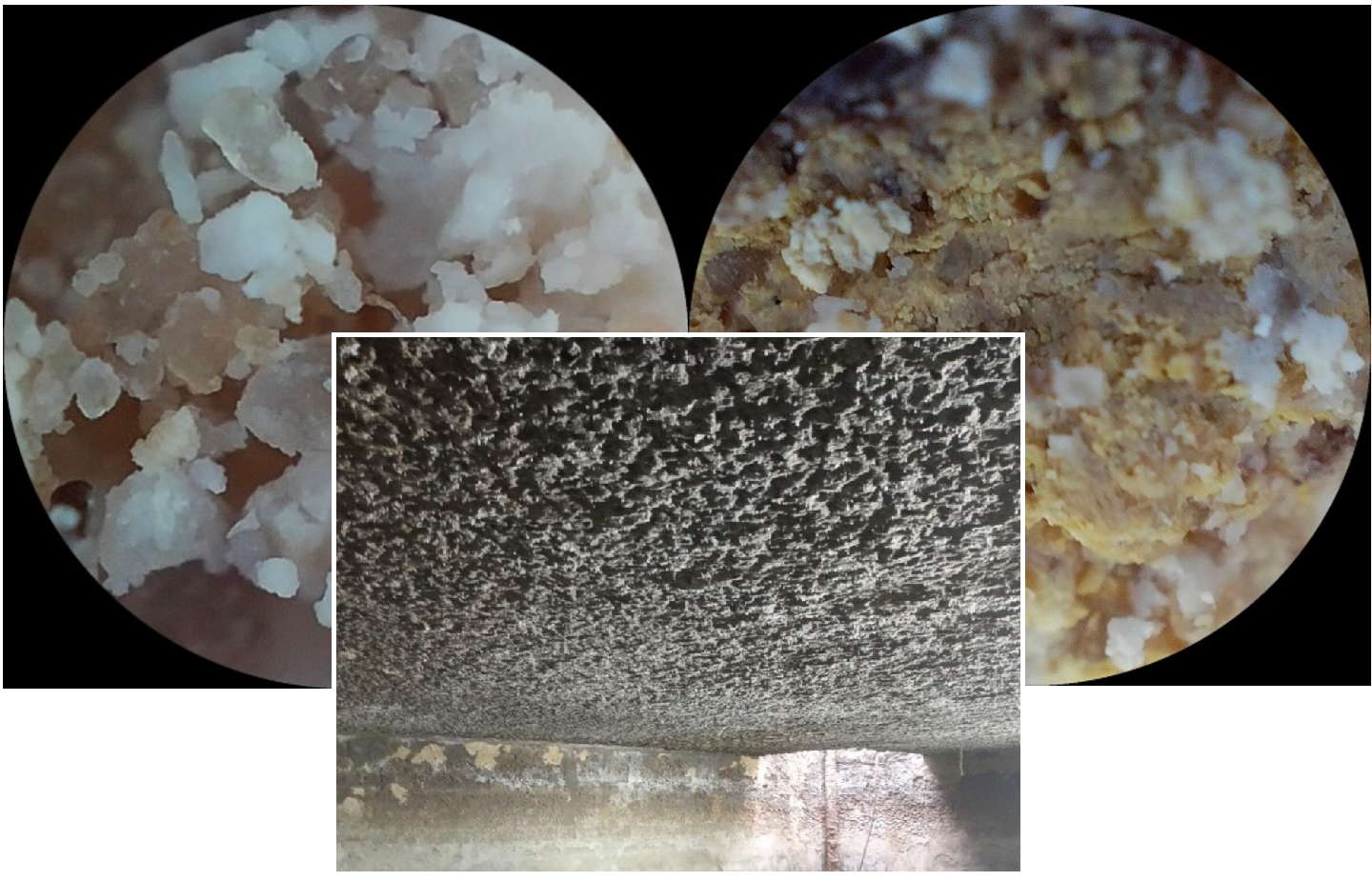
The relevance of the study is to determine the chemical composition of wastewater and its impact on the technical condition of the sewage system. Aim. The aim of the work was to investigate the chemical composition of wastewater and its effect on reinforced concrete structures of the sewage system. Methods. X-ray diffractometric, colorimetric, fluorimetric, gravimetric, titrimetric. Results. The study of the chemical composition of wastewater showed a shift in pH to the alkaline side, the suspension of dry substances in water was above the norm in the fourth sample by 5.3 %, in the fifth – by 36.3 %; the dry residue in the first sample by 31.3 %, in the second – by 20.2 %, in the third – by 13.9 %, in the fourth – by 9.3 % and in the fifth – by 27.4 %. The content of ammonium nitrogen was higher in the fourth experimental sample by 52.3 %, and in the fifth by 54.1 %. The level of nitrite ions in the first sample was higher by 9.1 %, in the second by 6.0 %, in the third and fifth by 42.4 %, and in the fourth by 36.4 %; the increase in nitrate ions in the first sample was by 11.1 %, in the second by 21.6 %, in the third by 16.0 %, in the fourth by 19.5 %, and in the fifth by 22.4 %. Conclusions. The implemented measures to reduce wastewater pollution were effective and reduced the load on concrete sewage structures. The scientific novelty of the results obtained lies in the field study of wastewater from a settling well of a pharmaceutical enterprise before and after preventive measures.
References
Anwar, A., Liu, X., & Zhang, L. (2022). Biogenic corrosion of cementitious composite in wastewater sewerage system–A review. Process Safety and Environmental Protection, 165, 545–585. https://doi.org/10.1016/j.psep.2022.07.030
Pramanik, S. K., Bhuiyan, M., Robert, D., Roychand, R., Gao, L., Cole, I., & Pramanik, B. K. (2024). Bio-corrosion in concrete sewer systems: Mechanisms and mitigation strategies. The Science of the total environment, 921, 171231. https://doi.org/10.1016/j.scitotenv.2024.171231
Ouattara, Z. A., Kabo-Bah, A. T., Dongo, K., & Akpoti, K. (2023). A Review of sewerage and drainage systems typologies with case study in Abidjan, Côte d’Ivoire: failures, policy and management techniques perspectives. Cogent Engineering, 10(1). https://doi.org/10.1080/23311916.2023.2178125
Bakera, A. T., Aboulela, A., Alexander, M. G., Bertron, A., Peyre Lavigne, M., Meulenyzer, S., & Patapy, C. (2025). Performance of Sewer Concretes with Calcium Sulpho-Aluminate Cement and Portland Cement Blends: Field and Laboratory Studies. Materials (Basel, Switzerland), 18(6), 1256. https://doi.org/10.3390/ma18061256
Shkromada, O., Paliy, A., Yurchenko, O., Khobot, N., Pikhtirova, A., Vysochin, I., Fedorenko, G., & Paliy, A. (2020). Influence of fine additives and surfactants on the strength and permeability degree of concrete. Eureka: Physics and Engineering, (2), 19–29. https://doi.org/10.21303/2461-4262.2020.001178
Merachtsaki, D., Tsardaka, E. C., Anastasiou, E., & Zouboulis, A. (2021). Evaluation of the Protection Ability of a Magnesium Hydroxide Coating against the Bio-Corrosion of Concrete Sewer Pipes, by Using Short and Long Duration Accelerated Acid Spraying Tests. Materials (Basel, Switzerland), 14(17), 4897. https://doi.org/10.3390/ma14174897
Liang, Z., Wu, D., Li, G., Sun, J., Jiang, F., & Li, Y. (2023). Experimental and modeling investigations on the unexpected hydrogen sulfide rebound in a sewer receiving nitrate addition: Mechanism and solution. Journal of environmental sciences (China), 125, 630–640. https://doi.org/10.1016/j.jes.2021.12.038
Wang, D., Guan, F., Feng, C., Mathivanan, K., Zhang, R., & Sand, W. (2023). Review on Microbially Influenced Concrete Corrosion. Microorganisms, 11(8), 2076. https://doi.org/10.3390/microorganisms11082076
Shkromada, O., Ivchenko, V., Chivanov, V., Shvets, O., Moskalenko, V., Kochenko, A., Babenko, O., Kharchenko, Y., Pikhtirova, A., & Yurchenko, O. (2022). Determining changes in the mineral composition of concrete due to chemical corrosion in a sulfate environment. Eastern-European Journal of Enterprise Technologies, 6(6 (120), 42–50. https://doi.org/10.15587/1729-4061.2022.268627
Shkromada, O., Pikhtirova, A., Chivanov, V., Ivchenko, V., Sribniak, N., Shvets, O., & Litsman, Y. (2022). Detection of the synergetic influence of chemical and microbiological factors on the properties of concrete constructions at chemical plants during the long-term service. EUREKA: Physics and Engineering, (4), 114–126. https://doi.org/10.21303/2461-4262.2022.002485
Zhang, L., Qiu, Y. Y., Sharma, K. R., Shi, T., Song, Y., Sun, J., Liang, Z., Yuan, Z., & Jiang, F. (2023). Hydrogen sulfide control in sewer systems: A critical review of recent progress. Water research, 240, 120046. https://doi.org/10.1016/j.watres.2023.120046
Liang, Z., Xie, W., Li, H., Li, Y., & Jiang, F. (2024). Integrating machine learning algorithm with sewer process model to realize swift prediction and real-time control of H2S pollution in sewer systems. Water research X, 23, 100230. https://doi.org/10.1016/j.wroa.2024.100230
Lv, J. Q., Yin, W. X., Xu, J. M., Cheng, H. Y., Li, Z. L., Yang, J. X., Wang, A. J., & Wang, H. C. (2024). Augmented machine learning for sewage quality assessment with limited data. Environmental science and ecotechnology, 23, 100512. https://doi.org/10.1016/j.ese.2024.100512
Li, J., Sharma, K., Li, W., & Yuan, Z. (2022). Swift hydraulic models for real-time control applications in sewer networks. Water research, 213, 118141. https://doi.org/10.1016/j.watres.2022.118141
Duan, H., Li, J., & Yuan, Z. (2024). Making waves: Knowledge and data fusion in urban water modelling. Water research X, 24, 100234. https://doi.org/10.1016/j.wroa.2024.100234
Calvin, J. J., Kaufman, T. M., Sedlak, A. B., Crook, M. F., & Alivisatos, A. P. (2021). Observation of ordered organic capping ligands on semiconducting quantum dots via powder X-ray diffraction. Nature communications, 12(1), 2663. https://doi.org/10.1038/s41467-021-22947-x
(2021). [Cabinet of Ministers of Ukraine Decree on the Approval of the Concept of the National Targeted Social Program "Drinking Water of Ukraine" for 2022-2026 April 28, 2021, No. 388-r]. (In Ukrainian). https://zakon.rada.gov.ua/laws/show/388-2021-%D1%80#Text"
Balabak, O., et al. (2023). Study of the hydrosystem andenvironmental monitoring of water quality. Journal of Ecological Engineering, 24(3), 178–187. https://doi.org/10.12911/22998993/158481
Fisher, R.A., Fisher, R. A. (1948). Questions and answers #14". The American Statistician. 2(5): 30–31. doi:10.2307/2681650. JSTOR 2681650
Luo, Z., Yu, H., Ma, H., Tan, Y., Wu, C., Sun, J., Wang, X., & Wu, P. (2025). Corrosion Products and Microstructural Evolution of Ordinary Portland Cement and High-Performance Concrete After Eight Years of Field Exposure in Qarhan Salt Lake. Materials (Basel, Switzerland), 18(8), 1769. https://doi.org/10.3390/ma18081769
Zhang, C., Li, J., Yu, M., Lu, Y., & Liu, S. (2024). Mechanism and Performance Control Methods of Sulfate Attack on Concrete: A Review. Materials (Basel, Switzerland), 17(19), 4836. https://doi.org/10.3390/ma17194836
Coppola, L., Beretta, S., Bignozzi, M. C., Bolzoni, F., Brenna, A., Cabrini, M., Candamano, S., Caputo, D., Carsana, M., Cioffi, R., Coffetti, D., Colangelo, F., Crea, F., De Gisi, S., Diamanti, M. V., Ferone, C., Frontera, P., Gastaldi, M. M., Labianca, C., Lollini, F., … Todaro, F. (2022). The Improvement of Durability of Reinforced Concretes for Sustainable Structures: A Review on Different Approaches. Materials (Basel, Switzerland), 15(8), 2728. https://doi.org/10.3390/ma15082728
Kato, S., & Kansha, Y. (2024). Comprehensive review of industrial wastewater treatment techniques. Environmental science and pollution research international, 31(39), 51064–51097. https://doi.org/10.1007/s11356-024-34584-0
Iurchenko, V., Melnykova, O., Samokhvalova, A.,Onyshchenko, N., Rachkovskyi, O., Mykhailova, L.(2023). Problems of providing Kharkiv with anecologically safe recreational zone based on theStudenok river. AIP Conference Proceedings, 2490, 195274. https://doi.org/10.1063/5.0148492
Shi, Y., Yang, D., Hu, C., & Lyu, L. (2023). Water self-purification via electron donation effect of emerging contaminants arousing oxygen activation over ordered carbon-enhanced CoFe quantum dots. Environmental science and ecotechnology, 20, 100356. https://doi.org/10.1016/j.ese.2023.100356
Pratiwi, D., Sumiarsa, D., Oktavia, D., & Sunardi, S. (2023). Water Quality Influences Self-Purification in the Cihawuk and Majalaya Segments Upstream of the Citarum River, West Java, Indonesia. Water, 15(16), 2998. https://doi.org/10.3390/w15162998
Drolc, A., & Vrtovsek, J. (2010). Nitrate and nitrite nitrogen determination in waste water using on-line UV spectrometric method. Bioresource technology, 101(11), 4228–4233. https://doi.org/10.1016/j.biortech.2010.01.015
Gan, F., Wu, K., Ma, F., Wei, C., & Du, C. (2022). In-situ monitoring of nitrate in industrial wastewater using Fourier transform infrared attenuated total reflectance spectroscopy (FTIR-ATR) coupled with chemometrics methods. Heliyon, 8(12), e12423. https://doi.org/10.1016/j.heliyon.2022.e12423
Usman, M. O., Aturagaba, G., Ntale, M., & Nyakairu, G. W. (2022). A review of adsorption techniques for removal of phosphates from wastewater. Water science and technology : a journal of the International Association on Water Pollution Research, 86(12), 3113–3132. https://doi.org/10.2166/wst.2022.382
Mairinger, T., Loos, M., & Hollender, J. (2021). Characterization of water-soluble synthetic polymeric substances in wastewater using LC-HRMS/MS. Water research, 190, 116745. https://doi.org/10.1016/j.watres.2020.116745
Wojnárovits, L., Homlok, R., Kovács, K., Tegze, A., & Takács, E. (2024). Wastewater Characterization: Chemical Oxygen Demand or Total Organic Carbon Content Measurement? Molecules (Basel, Switzerland), 29(2), 405. https://doi.org/10.3390/molecules29020405
Kumar, M., Nandi, M., & Pakshirajan, K. (2021). Recent advances in heavy metal recovery from wastewater by biogenic sulfide precipitation. Journal of environmental management, 278(Pt 2), 111555. https://doi.org/10.1016/j.jenvman.2020.111555
Shaji, P. S., Vincent, S. G. T., & Subburamu, K. (2025). Sulfate-reducing bacteria in removal of pollutants: a promising candidate for bioremediation. World journal of microbiology & biotechnology, 41(4), 125. https://doi.org/10.1007/s11274-025-04345-3
Lotfi, S., Chakit, M., & Belghyti, D. (2020). Groundwater Quality and Pollution Index for Heavy Metals in Saïs Plain, Morocco. Journal of health & pollution, 10(26), 200603. https://doi.org/10.5696/2156-9614-10.26.200603
El Morabet, R. ., Barhazi, L. ., Khan, R. A. ., Hejjaj, A. ., Harrara, R. ., Bouhafa, S. ., … Yeremenko, S. . (2021). Study of Seasonal variation and Index Based Assessment of Water Quality and Pollution in Semi-Arid Region of Morocco. Ecological Questions, 32(4), 113–125. https://doi.org/10.12775/EQ.2021.037
Downloads
Published
Issue
Section
License
Copyright (c) 2025 Oles Honchar Dnipro National University

This work is licensed under a Creative Commons Attribution 4.0 International License.
- Authors reserve the right of attribution for the submitted manuscript, while transferring to the Journal the right to publish the article under the Creative Commons Attribution License. This license allows free distribution of the published work under the condition of proper attribution of the original authors and the initial publication source (i.e. the Journal)
- Authors have the right to enter into separate agreements for additional non-exclusive distribution of the work in the form it was published in the Journal (such as publishing the article on the institutional website or as a part of a monograph), provided the original publication in this Journal is properly referenced
- The Journal allows and encourages online publication of the manuscripts (such as on personal web pages), even when such a manuscript is still under editorial consideration, since it allows for a productive scientific discussion and better citation dynamics (see The Effect of Open Access).