JUSTIFICATION OF BOILED SAUSAGE TECHNOLOGY WITH INCREASED PROTEIN CONTENT
DOI:
https://doi.org/10.15421/jchemtech.v34i1.337073Keywords:
boiled sausage products, protein, amino acids, minerals, nutrient composition, nutritional value.Abstract
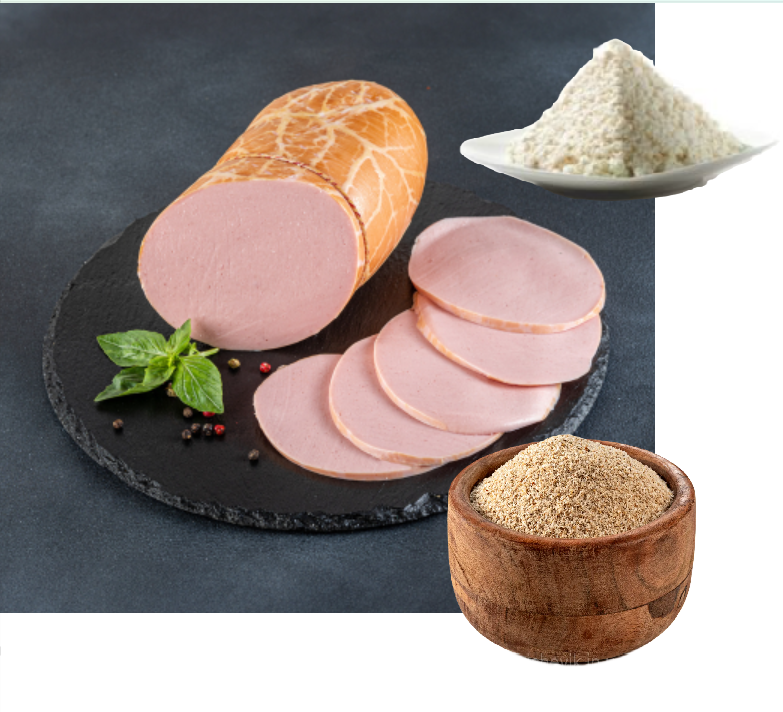
Boiled sausages are popular meat products among consumers. At the same time, the question arises of increasing the nutritional value, in particular, in terms of protein content, of boiled sausages. The purpose of this work is to substantiate the use of sodium caseinate, amaranth flour, collagen protein, psyllium as dietary fiber, dihydroquercetin and sea salt in the technology of boiled sausage. It was found that the experimental sample had an increased protein content by 2.7 %, a reduced fat content by 4.1 %, and moisture by 2.5 %; improved moisture-retaining (94.8 %) and moisture-binding (82.7 %) capabilities compared to the control sample. Increasing the pH to 6.34 compared to the control sample (6.19) contributed to reducing moisture loss during heat treatment and improving texture. The experimental sample exceeded the control in terms of mass fractions of all essential amino acids: valine – by 128 mg, histidine – by 57 mg, leucine – by 176 mg, isoleucine – by 99 mg, threonine – by 83 mg, lysine – by 147 mg, methionine + cystine – by 63 mg, tryptophan – by 27 mg, phenylalanine + tyrosine – by 196 mg. The experimental sample had an increased content of individual minerals compared to the control: calcium – by 9.1 mg, iron – by 308 μg, magnesium – by 11.5 mg, phosphorus – by 32.5 mg, potassium – by 20.9 mg, sodium – by 16 mg, zinc – by 0.13 mg, selenium – by 0.76 mg. Thus, a new technology of boiled sausage with an increased content of complete amino acid composition of total protein and minerals has been developed. The developed boiled sausage will expand the range of meat products for people with an active lifestyle.
References
Bal-Prylypko, L. V., Nikolayenko, M. S., Danylenko, S. H., Ustymenko, I. M., Ryabovol, M. V., Zhurenko, D. V. (2024). Justification of technology of sausages for herodietic purpose. Journal of Chemistry and Technologies, 32(3), 759–765. https://doi.org/10.15421/jchemtech.v32i3.306991.
Bal-Prylypko, L., Nikolaenko, M., Mushtruk, M., Nazarenko, M., Beiko, L. (2024). Physical and mathematical modelling of the process of cooking minced meat with spelt flour and champignon mushrooms. Animal Science and Food Technology, 15(2), 38–55. https://doi.org/10.31548/animal.2.2024.38
Soh, B. X. P., Smith, N. W., von Hurst, P. R., McNabb, W. C. (2024). Achieving High Protein Quality Is a Challenge in Vegan Diets: A Narrative Review. Nutrition Reviews, 176. https://doi.org/10.1093/nutrit/nuae176
Bevilacqua, E., Cruzat, V., Singh, I., Rose’Meyer, R. B., Panchal, S. K., Brown, L. (2023). The potential of spent coffee grounds in functional food development. Nutrients, 15(4), 994. https://doi.org/10.3390/nu15040994
Kianfar, E. (2021). Protein nanoparticles in drug delivery: animal protein, plant proteins and protein cages, albumin nanoparticles. Journal of Nanobiotechnology, 19(1), 159. https://doi.org/10.1186/s12951-021-00896-3
Bal-Prylypko, L., Nikolaenko, M., Volkhova, T., Holembovska, N., Tyshchenko, L., Ivaniuta, A., Israelian, V., Menchynska, A., Shynkaruk, O., Melnik, V. (2023). The study of functional and technological properties of vegetarian ice cream. In Potravinarstvo Slovak Journal of Food Sciences. 17, 110–121. https://doi.org/10.5219/1798
Rudyuk, V., Pasichnyi, V. (2023). Ways of integrating milk proteins into recipes of semi-smoked sausages. Scientific Messenger of LNU of Veterinary Medicine and Biotechnologies. Series: Food Technologies, 25(99), 80–85. https://doi.org/10.32718/nvlvet-f9914
Kang, K. M., Lee, S. H., Kim, H. Y. (2021). Quality properties of whole milk powder on chicken breast emulsion-type sausage. Journal of animal science and technology, 63(2), 405–416. https://doi.org/10.5187/jast.2021.e30
Zhao, Y. D., Piao, X. Y., Zheng, B.,Gao, P., Miao, W. (2023). Enhancement of surimi gel properties through the synergetic effect of fucoidan and oligochitosan, Food Hydrocolloid, 140. 108626. https://doi. org/10.1016/j.foodhyd.2023.108626.
Kang, K. M., Lee, S. H., Kim, H. Y. (2021). Quality properties of whole milk powder on chicken breast emulsion-type sausage. Journal of animal science and technology, 63(2), 405–416. https://doi.org/10.5187/jast.2021.e30
Llauger, M., Claret, A., Bou, R., López-Mas, L., Guerrero, L. (2021). Consumer Attitudes toward Consumption of Meat Products Containing Offal and Offal Extracts. Foods, 10(7), 1454. https://doi.org/10.3390/foods10071454
Marczak, A., Mendes, A. C. (2024). Dietary Fibers: Shaping Textural and Functional Properties of Processed Meats and Plant-Based Meat Alternatives. Foods, 13(12), 1952. https://doi.org/10.3390/foods13121952
Okuskhanova, E., Caporaso, N., Yessimbekov, Z., Assenova, B., Smolnikova, F., Rebezov, M. Thiruvengadam, M. (2021). Functional and physical properties of oil-in-water emulsion based on sodium caseinate, beef rumen and sunflower oil and its effect on nutritional quality of forcemeat. Journal of Dispersion Science and Technology, 44(3), 429–437. https://doi.org/10.1080/01932691.2021.1950008
Ren, Y., Huang, L., Zhang, Y., Li, H., Zhao, D., Cao, J., Liu, X. (2022). Application of Emulsion Gels as Fat Substitutes in Meat Products. Foods, 11(13), 1950. https://doi.org/10.3390/foods11131950
Israelian, V., Palamarchuk, I., Sevin, S., Holembovska, N., Prokopenko, N., Ivaniuta, A., Shynkaruk, O., Rudyk, Y., Nosevych, D., Tverezovska, N. (2022). The effect of vibration massage on the salting process of ostrich meat. Potravinarstvo Slovak Journal of Food Sciences, 16, 530–544. https://doi.org/10.5219/1775
Verbeke, C., Debonne, E., Versele, S., Van Bockstaele, F., Eeckhout, M. (2024). Technological Evaluation of Fiber Effects in Wheat-Based Dough and Bread. Foods, 13(16), 2582. https://doi.org/10.3390/foods13162582
Bakhsh A, Lee SJ, Lee EY, Hwang YH, Joo ST. Evaluation of Rheological and Sensory Characteristics of Plant-Based Meat Analog with Comparison to Beef and Pork. Food Sci Anim Resour., 41(6), 983-996. https://doi.org/10.5851/kosfa.2021.e50
Haque A, Ahmad S, Azad ZRAA, Adnan M, Ashraf SA. (2023). Incorporating dietary fiber from fruit and vegetable waste in meat products: a systematic approach for sustainable meat processing and improving the functional, nutritional and health attributes. Peer J, 11, e14977. https://doi.org/10.7717/peerj.14977
Mishra, B. P., Mishra, J., Paital, B., Rath, P. K., Jena, M. K., Reddy, B. V., ... & Sahoo, D. K. (2023). Properties and physiological effects of dietary fiber-enriched meat products: a review. Frontiers in Nutrition, 10, 1275341. https://doi.org/10.3389/fnut.2023.1275341
Holembovska, N., Slobodyaniuk, N., Israelian, V., Androshchiuk, O., Maceyko, V. (2024) Influence of organic acids on organoleptic and structural and mechanical properties of freshwater hydrobiont meat. Animal Science and Food Technology. 15(1), 9–28. https://doi.org/10.31548/animal.1.2024.09
Calderón-Oliver, M., & López-Hernández, L. H. (2020). Food Vegetable and Fruit Waste Used in Meat Products. Food Reviews International, 38(4), 628–654. https://doi.org/10.1080/87559129.2020.1740732.
Zhu, L., Zhang, Y., Han, J., Li, P., Li, X., Wu, X., & Li, Y. (2023). Effects of different dietary fibers on the physicochemical and sensory properties of emulsion-type sausages. Journal of Food Quality, 2023, 8892154. https://doi.org/10.1155/2023/8892154.
Danylenko, S., Nedorizanyuk, L., Potemska, O., Korol Т., Ivaniuta, A., Kryzhova, Y., Israelian, V., & Kovalenko, N. (2024). Improvement of the quality of pork meat during salting due to the use of starter bacterial cultures. Potravinarstvo Slovak Journal of Food Sciences, 18, 239–250. https://doi.org/10.5219/1953
Pérez-Ramírez, I. F., Sotelo-González, A. M., López-Echevarría, G., & Martínez-Maldonado, M. A. (2023). Amaranth Seeds and Sprouts as Functional Ingredients for the Development of Dietary Fiber, Betalains, and Polyphenol-Enriched Minced Tilapia Meat Gels. Molecules, 28(1), 117. https://doi.org/10.3390/molecules28010117
Baraniak, J., Kania-Dobrowolska, M. (2022). The Dual Nature of Amaranth-Functional Food and Potential Medicine. Foods (Basel, Switzerland), 11(4), 618. https://doi.org/10.3390/foods11040618
Tafadzwa, M. J., Zvamaziva, J. T., Charles, M., Amiel, M., Pepukai, M., Shepherd, M. (2021). Proximate, physico-chemical, functional and sensory properties OF quinoa and amaranth flour AS potential binders in beef sausages. Food chemistry, 365, 130619. https://doi.org/10.1016/j.foodchem.2021.130619
García Fillería, S. F., Rodríguez, M., Tironi, V. A. (2021). Antioxidant effect of amaranth flour or protein isolate incorporated in high-fat diets fed to Wistar rats. Influence of dose and administration duration. Journal of food biochemistry, 45(1), e13552. https://doi.org/10.1111/jfbc.13552
Patel, S., Sharma, R. (2024). Impact of Amaranth Flour on Water-Holding Capacity and Fat Retention in Processed Meat Products. LWT - Food Science and Technology, 195, 115810. https://doi.org/10.1016/j.lwt.2024.115810
Bal-Prylypko, L. V., Ustymenko, I. M., Yemtsev, V. I., Yemtseva, G. F., Golembovska, N. V., Kryzhova, Yu. P., Savchenko, O. A., Israelyan, V. M., Menchynska, A. A., Ivanyuta, A. O., Shtonda, O. A., Tolok, G. A., & Ryabovol, M. V. (2023). Scientific rationale for improving the technology of meat, fish, dairy and milk-containing products with increased nutritional value: monograph. Kyiv: CPU "Comprint".
Statkevych, O. I., Kolomiiets, Y. V., Holembovska, N. V., Israelian, V. M., Babych, О. A., Slobodyanyuk, N. M., Statkevych, A. O. (2024). Effects of nutrient medium on various-age larvae of Hermetia illucens. Regulatory Mechanisms in Biosystems, 15(4), 907-911. https://doi.org/10.15421/0224131
Dao, T.-K., Nguyen, T.-T., Vu, N.-T. (2025). A Review on the Role of Sea Salt in Food and Its Applications for Human Health. Mini Reviews in Organic Chemistry, 22, 214–225. https://doi.org/10.2174/0118756298273343231128062213
Bozkaya, O., Aluç, Y. (2024). Physico chemical characterization of food grade natural spring salt from the Central Anatolia region of Turkey and investigation of its microplastic content. Journal of Food Science and Technology., 61, 1711–1722. https://doi.org/10.1007/s13197-024-05942-0
Gheisari, H. R., Khosravi-Darani, K., Nematollahi, A. (2022). The impact of sodium reduction strategies on quality characteristics of meat products. Foods, 11(3), 420. https://doi.org/10.3390/foods11030420
Bhadra, B., Sakpal, A., Patil, S., Patil, S., Date, A., VPrasad, V., Dasgupta, S. (2021). A Guide to Collagen Sources, Applications and Current Advancements. Systematic Bioscience and Engineering [Internet], 1(2), 67–87 http://ojs.wiserpub.com/index.php/SBE/
Vlahova-Vangelova, D.B.; Balev, D.K.; Dragoev, S.G.; Dinkova, R.H. (2020). Reduction of nitrites addition in cooked sausages from phytonutrient supplemented pork. Carpathian J. Food Sci. Technol., 12, 60–68. https://doi.org/10.34302/crpjfst/2020.12.4.7
Muramatsu, D., Uchiyama, H., Kida, H., Iwai, A. (2020). In vitro anti-inflammatory and anti-lipid accumulation properties of taxifolin-rich extract from the Japanese larch, Larix kaempferi. Heliyon, 6(12), e05505. https://doi.org/10.1016/j.heliyon.2020.e05505
El‐Hadad, S. S., Tikhomirova, N. A., Abd El-Aziz, M. (2020). Biological activities of dihydroquercetin and its effect on the oxidative stability of butter oil. Journal of Food Processing and Preservation, 44. https://doi.org/10.1111/jfpp.14519
Wei, H., Zhao, T., Liu, X., Ding, Q., Yang, J., Bi, X., Cheng, Z., Ding, C., Liu, W. (2024). Mechanism of Action of Dihydroquercetin in the Prevention and Therapy of Experimental Liver Injury. Molecules, 29(15), 3537. https://doi.org/10.3390/molecules29153537
Li, C., Liu, J., Zhang, C., Cao, L., Zou, F., Zhang, Z. (2023). Dihydroquercetin (DHQ) ameliorates LPS-induced acute lung injury by regulating macrophage M2 polarization through IRF4/miR-132-3p/FBXW7 axis. Pulm Pharmacol Ther, 83, 102249. https://doi.org/10.1016/j.pupt.2023.102249
Zhang, X. (2022). Rheological properties and in vitro digestibility of chicken breast myofibrillar protein containing various psyllium (Plantago ovata) husk concentrations. International Journal of Food Science & Technology, 59(12), 9029–9038. https://doi.org/10.1111/ijfs.17335
Deng, C., Zou, H., Wu, Y., Lou, A., Liu, Y., Luo, J., Quan, W. (2024). Dietary supplementation with quercetin: An ideal approach for improving meat quality and oxidative stability of broiler chickens. Poultry Science, 103(8), 103789. https://doi.org/10.1016/j.psj.2024.103789
Lee, S. Y., Lee, D. Y., Kim, O. Y., Kang, H. J., Hur, S. J. (2020). Overview of studies on the use of natural antioxidative materials in meat products. Food Science of Animal Resources, 40(6), 863–880. https://doi.org/10.5851/kosfa.2020.e84
Yancheva, M.O. (2009). [Physicochemical and biochemical foundations of meat and meat product technology]. Educational manual. К. (in Ukrainian).
State Consumer Standard Of Ukraine (2006). [Boiled sausages, sausages, and sausages made from poultry or rabbit meat. General technical conditions]. (DSTU 4529:2006). Kyiv, Derzhpozhyvstandart Ukraine (in Ukrainian).
Deutz, N. E. P., Wolfe, R. R., Engelen, M. P. K. J. (2025). A new concept to establish protein requirements. Clinical nutrition (Edinburgh, Scotland), 48, 1–5. https://doi.org/10.1016/j.clnu.2025.02.002
Rivero Meza, S. L., Hirsch Ramos, A., Cañizares, L., Raphaelli, C.d.O., Bueno Peres, B., Gaioso, C. A., Egea, I., Estrada, Y., Flores, F. B. and de Oliveira, M. (2023), A review on amaranth protein: composition, digestibility, health benefits and food industry utilisation. Int J Food Sci Technol, 58, 1564–1574. https://doi.org/10.1111/ijfs.16056
Brouwer, I. A. (2020). The public health rationale for reducing saturated fat intakes: Is a maximum of 10% energy intake a good recommendation?. Nutr. Bull,45, 271–280. http://dx.doi.org/10.1111/nbu.12449.
Rashidinejad, A., Jameson, G. B., Singh, H. (2022). The Effect of pH and Sodium Caseinate on the Aqueous Solubility, Stability, and Crystallinity of Rutin towards Concentrated Colloidally Stable Particles for the Incorporation into Functional Foods. Molecules, 27(2), 534. https://doi.org/10.3390/molecules27020534
Liu, C., Kong, L., Yu, P., Wen, R., Yu, X., Xu, X., Peng, X. (2022). Whey Protein Hydrolysates Improved the Oxidative Stability and Water-Holding Capacity of Pork Patties by Reducing Protein Aggregation during Repeated Freeze–Thaw Cycles. Foods, 11(14), 2133. https://doi.org/10.3390/foods11142133
Xu, Y., Yan, H., Xu, W., Jia, C., Peng, Y., Zhuang, X., Qi, J., Xiong, G., Mei, L., Xu, X. (2022). The effect of water-insoluble dietary fiber from star anise on water retention of minced meat gels. Food research international (Ottawa, Ont.), 157, 111425. https://doi.org/10.1016/j.foodres.2022.111425
Mann, G., Mora, S., Madu, G., Adegoke, O. A. J. (2021). Branched-chain Amino Acids: Catabolism in Skeletal Muscle and Implications for Muscle and Whole-body Metabolism. Front Physiol. 20, 702826. https://doi.org/10.3389/fphys.2021.702826
Akram, M., Daniyal, M., Ali, A., Zainab, R., Shah, S.M., Munir, N., Tahir, I.M. (2020). Role of Phenylalanine and Its Metabolites in Health and Neurological disorders. Synucleins Biochemistry and Role in Diseases, 1–13. 10.5772/intechopen.83648
Sakr, M.F. (2022). Calcium: Why Is It Important?. In: Parathyroid Gland Disorders. Springer, Cham. https://doi.org/10.1007/978-3-031-07418-9_6.
Niemirich, O., Frolova, N., Ustymenko, I., Havrysh, A., Y. Furmanova, Y.,Pavliuchenko, O. , Skyrda, O., Hubenia, V., Liulka, O., Matiushenko, R. (2021). Influence of dietary supplement based on heme iron on dough properties and quality of antianemic cupcakes. Journal of Hygienic Engineering and Design, 36, 67–74.
Downloads
Published
Issue
Section
License
Copyright (c) 2025 Oles Honchar Dnipro National University

This work is licensed under a Creative Commons Attribution 4.0 International License.
- Authors reserve the right of attribution for the submitted manuscript, while transferring to the Journal the right to publish the article under the Creative Commons Attribution License. This license allows free distribution of the published work under the condition of proper attribution of the original authors and the initial publication source (i.e. the Journal)
- Authors have the right to enter into separate agreements for additional non-exclusive distribution of the work in the form it was published in the Journal (such as publishing the article on the institutional website or as a part of a monograph), provided the original publication in this Journal is properly referenced
- The Journal allows and encourages online publication of the manuscripts (such as on personal web pages), even when such a manuscript is still under editorial consideration, since it allows for a productive scientific discussion and better citation dynamics (see The Effect of Open Access).