COMPLEX PROCESSING AND PROSPECTS OF OAK FRUITS USE IN THE FOOD INDUSTRY
DOI:
https://doi.org/10.15421/jchemtech.v34i1.340806Keywords:
acorns, flour, starch, tannin, oil, protein isolateAbstract
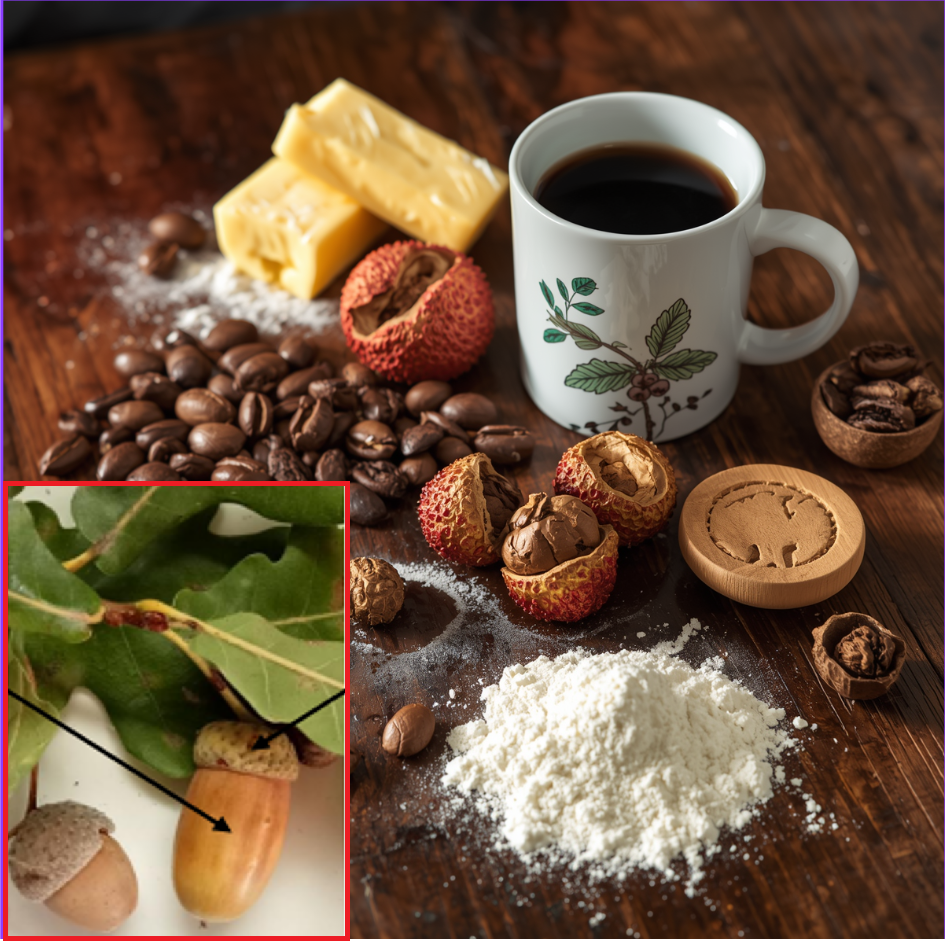
All morphological parts of the oak tree, including fruit, bark, wood and leaves, have many uses. Acorns are rich in nutrients, making them an important raw material resource. Since ancient times, oak fruits have been a valuable food product and today have great potential for use in various industries. Acorn flour is an important gluten-free component of bakery, flour confectionery and pasta products. Acorn starch can be used not only for food purposes, but also find application in the production of bioethanol, in paper production, in the manufacture of composites and polymer films. Acorn extracts exhibit antioxidant properties and are used for medicinal purposes. Oak fruit protein isolates have prospects in the production of food water-fat emulsion products, acorn oil is a source of valuable fatty acids. Acorn drinks - coffee substitutes - are becoming increasingly popular. The analysis of recent publications has shown that the issue of using oak fruits as a multipurpose raw material is given considerable attention. Scientific research is focused on individual processes, or the study of the properties and areas of application of certain compounds of oak fruits. The work is carried out using advanced research methods, they are characterized by the depth of study of the nutritional and technological characteristics of the resulting acorn products. The predictability of their behavior in multicomponent systems is an important characteristic that affects the technology and implementation of innovations in food production. An important task is not to implement separate processes for extracting acorn components, but a comprehensive, ecologically and economically justified waste-free processing of oak fruits into food, pharmaceutical and technical products. Solving this task requires systematization of research results and the formation of flexible approaches to the issue of complex processing of oak fruits.
References
Ballesteros, D., Pritchard, H. W. (2020). The cryobiotechnology of oaks: An integration of approaches for the long-term ex situ conservation of Quercus species. Forests, 11(12), 1281. https://doi.org/10.3390/f11121281
Szabłowska, E., Tańska, M. (2024). Acorns as a source of valuable compounds for food and medical applications: A review of Quercus species diversity and laboratory studies. Applied Sciences, 14(7), 2799. https://doi.org/10.3390/app14072799
Akcan, T., Gökçe, R., Asensio, M., Estévez, M., Morcuende, D. (2017). Acorn (Quercus spp.) as a novel source of oleic acid and tocopherols for livestock and humans: Discrimination of selected species from Mediterranean forest. Journal of Food Science and Technology, 54, 3050–3057. https://doi.org/10.1007/s13197-017-2740-3
Selinnyi, M. M., Korma, O. M. (2019). [Forest management of Ukraine: current state and development prospects]. Modern Economics, 17, 211–217. (in Ukrainian).
Wang, Y., Xu, C., Wang, Q., Jiang, Y., Qin, L. (2023). Germplasm resources of oaks (Quercus L.) in China: Utilization and prospects. Biology, 12(1), 76. https://doi.org/10.3390/biology12010076
Sliepykh, O. O. (2017). [Dependence between physicochemical characteristics of common oak acorns (Quercus robur L.) in Ukrainian steppe populations and their shape coefficient]. Biolohichni systemy, 9, 264–269 (in Ukranian)
Taib, M., Bouyazza, L., Lyoussi, B. (2020). Acorn oil: Chemistry and functionality. Journal of Food Quality, 2020, 8898370, 11. https://doi.org/10.1155/2020/8898370
Nieto, R., Rivera, M., García, M. A., Aguilera, J. F. (2002). Amino acid availability and energy value of acorn in the Iberian pig. Livestock Production Science, 77(2–3), 227–239. https://doi.org/10.1016/S0301-6226(02)00040-4
Rodríguez-Estévez, V., García, A., Gómez-Castro, A. G. (2009). Intrinsic factors of acorns that influence the efficiency of their consumption by Iberian pigs. Livestock Science, 122(2–3), 281–285. https://doi.org/10.1016/j.livsci.2008.09.011
Sun, Z., Liu, D., An, S., Wu, X., Zhang, J., Miao, Z. (2024). Effects of acorns on fatty acid composition and lipid metabolism in adipose tissue of Yuxi Black pigs. Animals, 14(22), 3271. https://doi.org/10.3390/ani14223271
Mohammadabadi, T., Azadi, M. S., Babaei, M. (2020). Effect of diets containing oak kernel on rumen fermentation and digestibility, blood metabolites and liver enzymes in Khuzestani buffalo. The Indian Journal of Animal Sciences, 90(5), 734–738. https://doi.org/10.56093/ijans.v90i5.104616
Sahi, S., Ouennes, H., Bayoud, A., Boukraa, M. (2022). Effect of incorporating holm oak acorn in the feed of "Saanen" breed dairy goats in the wilaya of Batna. Livestock Research for Rural Development, 34, 96. http://www.lrrd.org/lrrd34/10/3496same.html
Mekki, I., Smeti, S., Hajji, H., Mahouachi, M., Atti, N. (2022). Effects of green oak acorn (Quercus ilex) intake on nutrient digestibility, lamb growth, and carcass and non-carcass characteristics. Archives Animal Breeding, 65, 113–120. https://doi.org/10.5194/aab-65-113-2022
Wolf, P., Cappai, M. G. (2020). Response of fattening rabbits with acorns (Quercus pubescens Willd.) combined in the diet: Growth performance, carcass traits and perirenal fatty acid profile. Animals, 10(8), 1394. https://doi.org/10.3390/ani10081394
Bouderoua, K., Mourot, J., Selselet-Attou, G. (2009). The effect of green oak acorn (Quercus ilex) based diet on growth performance and meat fatty acids. Asian-Australasian Journal of Animal Sciences, 22(6), 843–848. https://doi.org/10.5713/ajas.2009.80571
Abdel-Tawwab, M., Abdulrahman, N. M., Ahmad, V. M., Ramzi, D. O. M., Hassan, B. R. (2021). Effects of dietary oak (Quercus aegilops L.) acorn on growth performance, somatic indices, and hemato-biochemical responses of common carp (Cyprinus carpio L.) at different stocking densities. Journal of Applied Aquaculture, 34(4), 877–893. https://doi.org/10.1080/10454438.2021.1902450
Chao, B., Liu, R., Zhang, X., Zhang, X., Tan, T. (2017). Tannin extraction pretreatment and very high gravity fermentation of acorn starch for bioethanol production. Bioresource Technology, 241, 900–907. https://doi.org/10.1016/j.biortech.2017.06.026
Okamoto, K., Goda, T., Yamada, T., Nagoshi, M. (2021). Direct ethanol production from xylan and acorn using the starch-fermenting basidiomycete fungus Phlebia acerina. Fermentation, 7(3), 116. https://doi.org/10.3390/fermentation7030116
Zhang, N., Jiang, J. C., Yang, J., et al. (2019). Citric acid production from acorn starch by tannin tolerance mutant Aspergillus niger AA120. Applied Biochemistry and Biotechnology, 188, 1–11. https://doi.org/10.1007/s12010-018-2902-4
Khaksaar, A. B., Jalali Torshizi, H., Hamzeh, Y. (2023). Valorization and development of acorn starch as sustainable and high-performance papermaking additive for improving bagasse pulp and paper properties. Waste and Biomass Valorization, 14, 937–947. https://doi.org/10.1007/s12649-022-01912-9
Li, S., Xia, J., Xu, Y., Yang, X., Mao, W., Huang, K. (2016). Preparation and characterization of acorn starch/poly(lactic acid) composites modified with functionalized vegetable oil derivatives. Carbohydrate Polymers, 142, 250–258. https://doi.org/10.1016/j.carbpol.2016.01.031
Chi, W., Ning, Y., Liu, W., Liu, R., Li, J., Wang, L. (2023). Development of a glue- and heat-sealable acorn kernel meal/κ-carrageenan composite film with high haze and UV-shield for packaging grease. Industrial Crops and Products, 204(A), 117250. https://doi.org/10.1016/j.indcrop.2023.117250
Onem, E., Gulumser, G., Akay, S., Yesil-Celiktas, O. (2014). Optimization of tannin isolation from acorn and application in leather processing. Industrial Crops and Products, 53, 16–22. https://doi.org/10.1016/j.indcrop.2013.12.014
Ozacar, M., Şengil, İ. A. (2002). The use of tannins from Turkish acorns (Valonia) in water treatment as a coagulant and coagulant aid. Turkish Journal of Engineering and Environmental Sciences, 26(3), 255–263.
Korus, J., Witczak, M., Ziobro, R., Juszczak, L. (2015). The influence of acorn flour on rheological properties of gluten-free dough and physical characteristics of the bread. European Food Research and Technology, 240, 1135–1143. https://doi.org/10.1007/s00217-015-2417-y
Martins, R. B., Gouvinhas, I., Nunes, M. C., Ferreira, L. M., Peres, J. A., Raymundo, A., Barros, A. I. R. N. A. (2022). Acorn flour from holm oak (Quercus rotundifolia): Assessment of nutritional, phenolic, and technological profile. Current Research in Food Science, 5, 2211–2218. https://doi.org/10.1016/j.crfs.2022.11.003
Martins, R. B., Garzón, R., Peres, J. A., et al. (2022). Acorn flour and sourdough: An innovative combination to improve gluten-free bread characteristics. European Food Research and Technology, 248, 1691–1702. https://doi.org/10.1007/s00217-022-03996-y
Skendi, A., Mouselemidou, P., Papageorgiou, M., Papastergiadis, E. (2018). Effect of acorn meal-water combinations on technological properties and fine structure of gluten-free bread. Food Chemistry, 253, 119–126. https://doi.org/10.1016/j.foodchem.2018.01.144
Martins, R. B., Nunes, M. C., Ferreira, L. M. M., Peres, J. A., Barros, A. I. R. N. A., Raymundo, A. (2020). Impact of acorn flour on gluten-free dough rheology properties. Foods, 9(5), 560. https://doi.org/10.3390/foods9050560
Gkountenoudi-Eskitzi, I., Kotsiou, K., Irakli, M. N., Lazaridis, A., Biliaderis, C. G., Lazaridou, A. (2023). In vitro and in vivo glycemic responses and antioxidant potency of acorn and chickpea fortified gluten-free breads. Food Research International, 166, 112579. https://doi.org/10.1016/j.foodres.2023.112579
Korus, A., Gumul, D., Krystyjan, M., et al. (2017). Evaluation of the quality, nutritional value and antioxidant activity of gluten-free biscuits made from corn-acorn flour or corn-hemp flour composites. European Food Research and Technology, 243, 1429–1438. https://doi.org/10.1007/s00217-017-2853-y
Summo, A., Squeo, G., Caponio, F., Pasqualone, A., Makhlouf, F. Z., Barkat, M., Difonzo, G. (2019). Effect of acorn flour on the physicochemical and sensory properties of biscuits. Heliyon, 5(8), e02242. https://doi.org/10.1016/j.heliyon.2019.e02242
Parsaei, M., Goli, M., Abbas, H. (2018). Oak flour as a replacement of wheat and corn flour to improve biscuit antioxidant activity. Food Science & Nutrition, 6(2). https://doi.org/10.1002/fsn3.524
Masmoudi, M., Besbes, S., Bouaziz, M. A., Khlifi, M., Yahyaoui, D., Attia, H. (2020). Optimization of acorn (Quercus suber L.) muffin formulations: Effect of using hydrocolloids by a mixture design approach. Food Chemistry, 328, 127082. https://doi.org/10.1016/j.foodchem.2020.127082
Kasprzak-Drozd, K., Mołdoch, J., Gancarz, M., Wójtowicz, A., Kowalska, I., Oniszczuk, T., Oniszczuk, A. (2024). In vitro digestion of polyphenolic compounds and the antioxidant activity of acorn flour and pasta enriched with acorn flour. International Journal of Molecular Sciences, 25(10), 5404. https://doi.org/10.3390/ijms25105404
Özdikicierler, O., Akcan, T. (2023). Bioactive phytochemicals from acorn (Quercus spp.) oil processing by-products. In Hassanien, M. F. R. (Ed.), Bioactive Phytochemicals from Vegetable Oil and Oilseed Processing By-products. Cham: Springer. https://doi.org/10.1007/978-3-030-91381-6_35
Bernardo-Gil, M. G., Lopes, I. M. G., Casquilho, M., Ribeiro, M. A., Esquível, M. M., Empis, J. (2007). Supercritical carbon dioxide extraction of acorn oil. The Journal of Supercritical Fluids, 40(3), 344–348. https://doi.org/10.1016/j.supflu.2006.07.026
Karabas, H. (2013). Biodiesel production from crude acorn (Quercus frainetto L.) kernel oil: An optimisation process using the Taguchi method. Renewable Energy, 53, 384–388. https://doi.org/10.1016/j.renene.2012.12.002
Naderi, B., Keramat, J., Nasirpour, A., Aminifar, M. (2020). Complex coacervation between oak protein isolate and gum Arabic: Optimization and functional characterization. International Journal of Food Properties, 23(1), 1854–1873. https://doi.org/10.1080/10942912.2020.1825484
Sekeroglu, N., Ozkutlu, F., Kilic, E. (2017). Mineral composition of acorn coffees. Indian Journal of Pharmaceutical Education and Research, 51(3), 504–507. https://doi.org/10.5530/ijper.51.3s.75
Coelho, M., Silva, S., Rodríguez-Alcalá, L. M., Oliveira, A., Costa, E. M., Borges, A., Martins, C., Rodrigues, A. S., & Pintado, M. M. E. (2018). Quercus-based coffee-like beverage: Effect of roasting process and functional characterization. Food Measure, 12, 471–479. https://doi.org/10.1007/s11694-017-9660-9
An, T., Tang, M., An, J. (2022). Ethnological approach to acorn utilization in prehistory: A case study of acorn mook making in South Korea. Frontiers in Plant Science, 13. https://doi.org/10.3389/fpls.2022.996649
Zarroug, Y., Boulares, M., Mejri, J., Slimi, B., Hamdaoui, G., Djebi, S., Saidi, F., Nasri, H., Sfayhi, D. T., Kharrat, M. (2020). Extraction and characterization of Tunisian Quercus ilex starch and its effect on fermented dairy product quality. International Journal of Analytical Chemistry, 8868673. https://doi.org/10.1155/2020/8868673
Guo, C., Han, F., Geng, S., Shi, Y. Z., Ma, H., Liu, B. (2023). The physicochemical properties and Pickering emulsifying capacity of acorn starch. International Journal of Biological Macromolecules, 239, 124289. https://doi.org/10.1016/j.ijbiomac.2023.124289
Allouch, M., Alami, M., Boukhlifi, F. (2015). Production of fuel briquettes from acorn shells and acorn cups. In 2015 3rd International Renewable and Sustainable Energy Conference (IRSEC). Marrakech, Morocco. https://doi.org/10.1109/IRSEC.2015.7455026
Ivashchuk, O., Atamanyuk, V., Chyzhovych, R., Manastyrska, V., Barabakh, S., Sobechko, I. (2024). Research of common oak acorns use for alternate solid fuel production. Journal of Chemistry and Technologies, 32(3), 599–604. https://doi.org/10.15421/jchemtech.v32i3.304213
Yin, P., Yang, L., Li, K., Fan, H., Xue, Q., Li, X., Sun, L., Liu, Y. (2019). Bioactive components and antioxidant activities of oak cup crude extract and its four partially purified fractions by HPD-100 macroporous resin chromatography. Arabian Journal of Chemistry, 12(2), 249–261. https://doi.org/10.1016/j.arabjc.2016.09.018
Hanson, K. E., Bryant, P. L., Painter, A. M., Skibo, J. M. (2019). Acorn processing and pottery use in the Upper Great Lakes: An experimental comparison of stone boiling and ceramic technology. Ethnoarchaeology, 11(2), 170–185. https://doi.org/10.1080/19442890.2019.1642574
Sasani, N., Kazemi, A., Babajafari, S., Amiri-Ardekani, E., Rezaiyan, M., Barati-Boldaji, R., Mazloomi, S. M., Cain, C. T., Clark, C. T., Ashrafi-Dehkordi, E. (2022). Food Science & Nutrition, 11(2), 883–891. https://doi.org/10.1002/fsn3.3123
Monteiro, V., Soares, C., Grosso, C., Delerue-Matos, C., Ramalhosa, M. J. (2023). From forest to table: Optimizing the nutritional value of acorns through effective tannin extraction. Biology and Life Sciences Forum, 26(1), 16. https://doi.org/10.3390/Foods2023-15036
Syrokhman, I. V., Zadorozhnyi, I. M., Ponomarov, P. Kh. (2007). [Commodity science of food products: Textbook (4th ed., revised and supplemented)]. Kyiv: Libra. (in Ukrainian).
Nazarenko, V. O., Yudicheva, O. P., Zhuk, V. A. (2012). [Formation of product quality. Part 1: Textbook]. Kyiv: Tsentr uchbovoi literatury. (in Ukrainian).
Sekeroglu N., Ozkutlu F., Kilic E. (2017) Mineral Composition of Acorn Coffees, Indian Journal of Pharmaceutical Education and Research, 51(3), 504–507. doi: 10.5530/ijper.51.3s.75
Reva, M. L., Reva, N. N. (1976). [Wild edible plants of Ukraine]. Kyiv: Naukova Dumka. (in Ukrainian).
Díaz-Rojas, L., Galán-Bernal, N., Forero, D. P., Linares, E. L., Marín-Loaiza, J. C., Osorio, C. (2019). Characterization of odour-active volatiles and sensory analyses of roasted oak (Quercus humboldtii Bonpl.) acorns, a coffee substitute. Vitae, 26(1), 44–50. https://doi.org/10.17533/udea.vitae.v26n1a05
Lunkov, A. V., Ozharevskyi, V. A., Poltsev, I. V. (2014). [Fundamentals of survival in combat conditions: Educational-methodical manual]. Lviv: ASV. (in Ukrainian).
Sardão, R., Alexandre, E., Amaral, R., Saraiva, J. A., Pintado, M. (2019). Effect of high pressure processing on a functional acorn beverage. In Proceedings of the XXVI Encontro Nacional da Sociedade Portuguesa de Química. Aveiro, Portugal. https://doi.org/10.13140/RG.2.2.13397.99041
Downloads
Published
Issue
Section
License
Copyright (c) 2026 Oles Honchar Dnipro National University

This work is licensed under a Creative Commons Attribution 4.0 International License.
- Authors reserve the right of attribution for the submitted manuscript, while transferring to the Journal the right to publish the article under the Creative Commons Attribution License. This license allows free distribution of the published work under the condition of proper attribution of the original authors and the initial publication source (i.e. the Journal)
- Authors have the right to enter into separate agreements for additional non-exclusive distribution of the work in the form it was published in the Journal (such as publishing the article on the institutional website or as a part of a monograph), provided the original publication in this Journal is properly referenced
- The Journal allows and encourages online publication of the manuscripts (such as on personal web pages), even when such a manuscript is still under editorial consideration, since it allows for a productive scientific discussion and better citation dynamics (see The Effect of Open Access).