QUALITY AND SAFETY OF PLANT-BASED FROZEN DESSERTS
DOI:
https://doi.org/10.15421/jchemtech.v34i2.340964Keywords:
Lactose-free ice cream;, health food;, technology;, research methods,, quality control;, restaurant businessAbstract
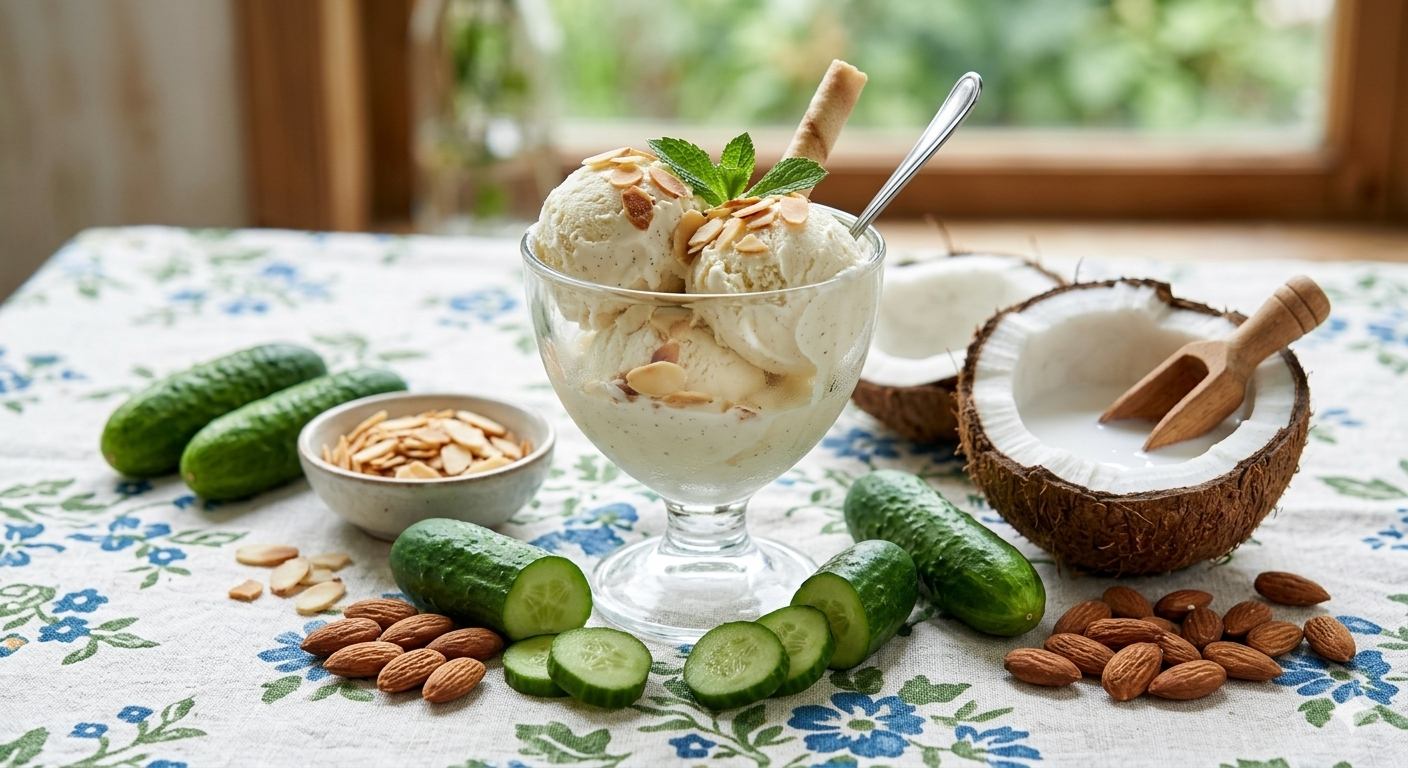
The article substantiates the relevance of developing frozen desserts based on plant-based raw materials as a promising direction of the modern food industry. The trends of increasing demand for products of plant origin are analyzed, which is due to the spread of vegan and vegetarian nutrition, increased consumer attention to a healthy lifestyle and functional properties of food products. The purpose of the study was to substantiate approaches to assessing the quality and safety of frozen desserts based on plant-based raw materials in the absence of a single regulatory framework for such products. The object of the study was the technology of producing frozen desserts using almond drink, coconut cream and cucumber juice. An organoleptic assessment was carried out, and physicochemical quality indicators (acidity, mass fraction of dry matter, content of simple sugars) and safety indicators (content of toxic elements) were determined. It was established that the developed samples met the requirements of DSTU 4734:2007 according to the studied indicators. The best organoleptic properties were obtained from the sample based on coconut cream and almond drink, which received 29 points out of 30 possible. The acidity values were 9.0–10.0 °T, and the mass fraction of dry matter was 30.6–42.8 %, which met regulatory requirements. The content of toxic elements did not exceed permissible levels. The results obtained confirm the prospects of using plant raw materials in the production of frozen desserts for health purposes.
References
Kalashnyk, O. V., Lebid, M. A., Kalashnyk, O. D. (2024). [Main types of milk substitutes for making vegan ice cream]. Iakist ta bezpechnist produktsii u vnutrishnii i zovnishnii torhivli y torhovelne pidpryiemnytstvo: suchasni vektory rozvytku i perspektyvy: mat-ly IV Mizhnarodnoi naukovo-praktychnoi Internet-konferentsii, 111–113 (in Ukrainian).
Sukhenko, Yu. H., Polishchuk, H. Ye., Sarana, V. V. (2019). Scientific and technical support for ice cream production. Monohrafiia. NUBiP Ukrainy. (in Ukrainian).
ScienceDirect. (2021). Motives of consumers following a vegan diet and their attitudes towards animal agriculture - ScienceDirect; The Effects of Vegetarian and Vegan Diet during Pregnancy on the Health of Mothers and Offspring. https://life.pravda.com.ua/columns/2021/11/1/246346/
McCarthy, K. S., Parker, M., Ameerally, A., Drake, S. L., Drake, M. A. (2017). Drivers of choice for fluid milk versus plant-based alternatives: What are consumer perceptions of fluid milk? Journal of Dairy Science, 100(8), 6125–6138. https://www.sciencedirect.com/science/article/pii/S002203021730526X
MedlinePlus Genetics. (2025). Lactose intolerance. https://salo.li/6eF3442
Omoni, A. O., Aluko, R. E. (2005). Soybean foods and their benefits: Potential mechanism of action. Nutrition Reviews, 63(8), 272–283.
Pistollato, F., Iglesias, R. C., Ruiz, R., Aparicio, S., Crespo, J., Lopez, L. D., Manna, P. P., Giampieri, F., Battino, M. (2018). Nutritional patterns associated with the maintenance of neurocognitive functions and the risk of dementia and Alzheimer’s disease: A focus on human studies. Pharmacological Research, 131, 32–43. https://doi.org/10.1016/j.phrs.2018.03.012
Rita, S. A., Luciana, B. (2018). Milk and Parkinson disease: Could galactose be the missing link? Mediterranean Journal of Nutrition and Metabolism. https://doi.org/10.3233/MNM-180234
Zujko, M. E., Witkowska, A. M. (2013). Antioxidant Potential and Polyphenol Content of Beverages, Chocolates, Nuts, and Seeds. International Journal of Food Properties, 17(1), 86–92. https://doi.org/10.1080/10942912.2011.614984
Aydar, E. F., Tutuncu, S., Ozcelik, B. (2020). Plant-based milk substitutes: Bioactive compounds, conventional and novel processes, bioavailability studies, and health effects. Journal of Functional Foods, 70, 103975. https://doi.org/10.1016/j.jff.2020.103975
Agroweek. (2023). Global ice cream market to reach $140 billion by 2033. https://agroweek.com/news/svitovyj-rynok-morozyva-dosyagne-140/
Motuzka, Yu., Koshelnyk, A. (2019). Plant-based dairy product analogues market: global trends. Tovary i rynky, (3), 38–49. (in Ukrainian).
TSN (2023). Main types of plant-based milk https://tsn.ua/zdorovya/korysni-statti/roslinne-moloko-korst-ta-protipokazannya-2291563.html
Surl.li. (2025). Plant-based milk: types and benefits. http://surl.li/zvglbr
Ukr.Media. (2025). Types of plant-based milk: beneficial properties. https://ukr.media/food/385898/
Merzlov, S. V., Shurchkova, Yu. O., Tsebro, A. D., Hrebelnyk, O. P., Kalinina, H. P., Rol, N. V. (2021). Physico-chemical and organoleptic characteristics of plant-based milk required in hotel and restaurant complexes. Naukovyi visnyk LNUVMB im S.Z. Gzhytskoho. Seriia: Kharchovi tekhnolohii, 23(96), 28–32 (in Ukrainian).
Romulo, A. (2022). Nutritional Contents and Processing of Plant-Based Milk: A Review. 5th International Conference on Eco Engineering Development, IOP Conference Series: Earth and Environmental Science, 998, 012054. https://doi:10.1088/1755-1315/998/1/012054
Craig, W. J., Brothers, C. J. (2022). Nutritional Content of Non-Dairy Frozen Desserts. Nutrients, 14(19), 4150. https://doi:10.3390/nu14194150
Akalın, H., Kınık, Ö., Şatır, G. (2024). Manufacturing plant-based non-dairy and probiotic frozen desserts and their impact on physicochemical, sensory and functional aspects. Journal of Food Science and Technology, 61, 1874–1883. https://doi.org/10.1007/s13197-024-05964-8
Ropciuc, S., Ghinea, C., Leahu, A., Prisacaru, A. E., Oroian, M. A., Apostol, L. C., Dranca, F. (2024). Development and Characterization of New Plant-Based Ice Cream Assortments Using Oleogels as Fat Source. Gels, 10(6), 397. https://doi.org/10.3390/gels10060397
State Committee of Ukraine for Technical Regulation and Consumer Policy. (2007). [Milk ice cream, cream ice cream, ice cream. General technical conditions]. (DSTU 4733:2007). Kyiv, Derzhpozhyvstandart Ukraine (in Ukrainian).
State Committee of Ukraine for Technical Regulation and Consumer Policy. (2007). [Fruit and berry ice cream, aromatic, sherbet, ice. General technical conditions]. (DSTU 4734:2007). Kyiv, Derzhpozhyvstandart Ukraine (in Ukrainian).
State Committee of Ukraine for Technical Regulation and Consumer Policy. (2007). [Ice cream with a combined composition of raw materials. General technical conditions]. (DSTU 4735:2007). Kyiv, Derzhpozhyvstandart Ukraine (in Ukrainian).
Holembovska, N. V., Volkhova, T. V. (2025). [Biological value and consumer properties of functional vegetarian ice cream]. Innovatsii ta tekhnolohii v sferi posluh i kharchuvannia, 3(17), 23–28 (in Ukrainian).
Aydemir, L. Y., Demir, H., Erbay, Z., Kılıçarslan, E., Salum, P., Ozdemir, M. B. (2025). Production of Vegan Ice Cream: Enrichment with Fermented Hazelnut Cake. Fermentation, 11, 454. https://doi.org/10.3390/fermentation11080454
Pontonio, E., Montemurro, M., Dingeo, С., Rotolo, M., Centrone, D., Carofiglio, V. E., Rizzello, C. G. (2022). Design and characterization of a plant-based ice cream obtained from a cereal/legume yogurt-like. LWT, 161, 113327. https://www.sciencedirect.com/science/article/pii/S0023643822002626
Vicent, V. (2023). Plant-Based Ice Cream: Processing, Composition and Meltdown Properties Analysis. Tanzania Journal of Science, 49(2), 446–455. https://DOI:10.4314/tjs.v49i2.15
Ropciuc, S., Ghinea, C., Leahu, A., Prisacaru, A. E., Oroian, M. A., Apostol, L. C., Dranca, F. (2024). Development and Characterization of New Plant-Based Ice Cream Assortments Using Oleogels as Fat Source. Gels, 10, 397. https://doi.org/10.3390/gels10060397
Craig, W. J., Brothers, C. J. (2022). Nutritional Content of Non-Dairy Frozen Desserts. Nutrients, 14(19), Article 4150. doi:10.3390/nu14194150. https://pmc.ncbi.nlm.nih.gov/articles/PMC9571912/
Akalın, H., Kınık, Ö., Şatır, G. (2024). Manufacturing plant-based non-dairy and probiotic frozen desserts and their impact on physicochemical, sensory and functional aspects. Journal of Food Science and Technology, 61, 1874–1883. https://doi.org/10.1007/s13197-024-05964-8
Erem, E., Akdeniz, E., Cayır, M., Icyer, N. C., Toker, O. S. (2024). Fruit-based vegan ice cream-type frozen dessert with aquafaba: effect of fruit types on quality parameters. Journal of Food Science and Technology, 61(5), 907–917. https://doi:10.1007/s13197-023-05885-y
Gorman, M., Moss, R., McSweeney, M. B. (2023). Sensory perception of ice cream and plant-based alternatives evaluated blinded and with ingredient lists. Food and Humanity, 1, 1267–1273. https://doi.org/10.1016/j.foohum.2023.09.028
Leahu, A., Ropciuc, S., Ghinea, C. (2022). Plant-Based Milks: Alternatives to the Manufacture and Characterization of Ice Cream. Applied Sciences, 12, 1754. https://doi.org/10.3390/app12031754
Kot, A. (2020). Study of the properties of vegan ice cream based on almond drink. Zeszyty Problemowe Postępów Nauk Rolniczych, 600. https://doi.org/10.22630/ZPPNR.2020.600.3
Beegum, P. P. S., Nair, Joinpreet, Manikantan, M. R., Pandiselvam, R., Shill, S., Neenu, S., Hebbar, K. B. (2022). Effect of coconut milk, tender coconut and coconut sugar on the physico-chemical and sensory attributes in ice cream. Journal of Food Science and Technology, 59(7), 2605–2616. https://doi:10.1007/s13197-021-05279-y
Samarasinghe, S., Fernando, S., Amarathunga, Y., de Silva, P. G. S. (2025). Development of coconut-based non-dairy ice cream using underutilized Sri Lankan fruits and evaluation of its sensory and physicochemical properties. Tropical Agricultural Research and Extension. https://DOI:10.4038/tare.v28i4.5805
Ministry of Health of Ukraine. «On approval of the State Hygienic Rules and Norms "Regulations on Maximum Levels of Certain Contaminants in Food Products» : Order of the Ministry of Health of Ukraine № 368 vid 13.05.2013 r. https://zakon.rada.gov.ua/laws/show/z0774-13/ed20130513#Text
State Committee of Ukraine for Technical Regulation and Consumer Policy. (2015). [Fruit and vegetable processed products. Methods for the determination of dry matter or moisture]. (DSTU 7804:2015). Kyiv, Derzhpozhyvstandart Ukraine (in Ukrainian).
National Standard of Ukraine. (2008). [Fruit and vegetable processing products. Methods for determining titratable acidity]. (DSTU 4957:2008). Kyiv, Derzhpozhyvstandart Ukraine (in Ukrainian).
State Enterprise «Poltavastandardmetrology». (2022). [Measuring the mass concentration of mono- and disaccharides in food products and beverages using high-performance liquid chromatography]. RIVTs 7.2–03–48–2022 (in Ukrainian).
State Enterprise «Poltavastandardmetrology». (2022). [Conducting element content testing using inductively coupled plasma atomic emission spectrometry]: RIVTs 7.2–03–18–2022 (in Ukrainian).
Downloads
Published
Issue
Section
License
Copyright (c) 2026 Oles Honchar Dnipro National University

This work is licensed under a Creative Commons Attribution 4.0 International License.
- Authors reserve the right of attribution for the submitted manuscript, while transferring to the Journal the right to publish the article under the Creative Commons Attribution License. This license allows free distribution of the published work under the condition of proper attribution of the original authors and the initial publication source (i.e. the Journal)
- Authors have the right to enter into separate agreements for additional non-exclusive distribution of the work in the form it was published in the Journal (such as publishing the article on the institutional website or as a part of a monograph), provided the original publication in this Journal is properly referenced
- The Journal allows and encourages online publication of the manuscripts (such as on personal web pages), even when such a manuscript is still under editorial consideration, since it allows for a productive scientific discussion and better citation dynamics (see The Effect of Open Access).