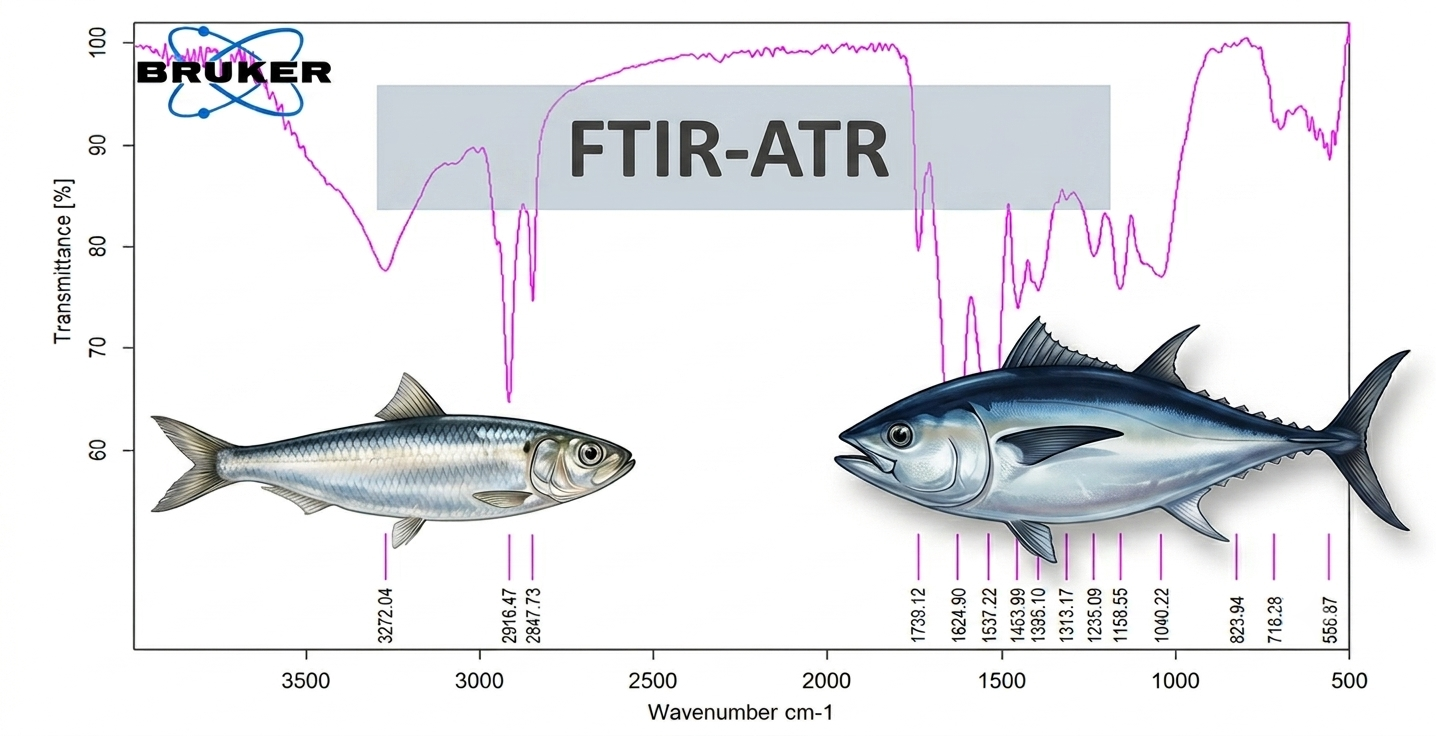
FTIR-ATR CHARACTERIZATION AND SCREENING OF ANTIOXIDANT AND ANTI-INFLAMMATORY POTENTIAL OF CHITIN, AND COLLAGEN DERIVED FROM THUNNUS THYNNUS AND SARDINA PILCHARDUS COPRODUCTS
DOI:
https://doi.org/10.15421/jchemtech.v34i2.349427Keywords:
Sardina pilchardus, Thunnus thynnus, Coproducts, Chitin, CollagenAbstract
The problem of fishery coproducts has increased in recent years and has become a global problem influenced by various biological, technical, operational, and socio-economic factors. This work aims to valorize the coproducts of two pelagic species, bluefin tuna (Thunnus thynnus) and sardines (Sardina pilchardus), by the extraction and characterization of the bioactive substances (Chitin and collagen) by physicochemical and FTIR-ATR analysis, and the in vitro evaluation of their antioxidant and anti-inflammatory potential. From the extraction yield, T. thynnus recorded the highest extraction yield for both fractions (chitin and collagen) compared to S. pilchardus. The FTIR-ATR spectrum showed bands and peaks corresponding to functional groups of the substances tested. The evaluation of the antioxidant potential showed that sardine and tuna collagen have good antiradical, anti-inflammatory, and anti-hemolytic effects compared to chitin. The results revealed that the bioactive substances (chitin and collagen) extracted from T. thynnus and S. pilchardus byproducts could have promising applications in the food, pharmaceutical, and nutraceutical sectors.
References
Ali, A., Wei, S., Ali, A., Khan, I., Sun, Q., Xia, Q., Wang, Z., Han, Z., Liu, Y., Liu, S. (2022). Research Progress on Nutritional Value, Preservation and Processing of Fish – A Review. Foods, 11(22), 3669. https://doi.org/10.3390/foods11223669.
Coppola, D., Lauritano, C., Palma Esposito, F., Riccio, G., Rizzo, C., de Pascale, D. (2021). Fish waste: From problem to valuable resource. Marine Drugs, 19(2), 116. https://doi.org/10.3390/md19020116
Roy, V. C., Islam, M. R., Sadia, S., Yeasmin, M., Park, J.-S., Lee, H.-J., Chun, B.-S. (2023). Trash to Treasure: An Up-to-Date Understanding of the Valorization of Seafood By-Products, Targeting the Major Bioactive Compounds. Marine Drugs, 21(9), 485. https://doi.org/10.3390/md21090485.
Jimenez-Champi, D., Romero-Orejon, F. L., Muñoz, A. M., Ramos-Escudero, F. (2024). The Revalorization of Fishery By-Products: Types, Bioactive Compounds, and Food Applications. International Journal of Food Science, 2024, 6624083. https://doi.org/10.1155/2024/6624083.
Gaikwad, S., Kim, M. J. (2024). Fish By-Product Collagen Extraction Using Different Methods and Their Application. Marine Drugs, 22(2), 60. https://doi.org/10.3390/md22020060
Nawaz, A., Li, E., Irshad, S., Xiong, Z., Xiong, H., Shahbaz, H. M., Siddique, F. (2020). Valorization of fisheries byproducts: Challenges and technical concerns to the food industry. Trends in Food Science & Technology, 99, 34–43. https://doi.org/10.1016/j.tifs.2020.02.022
Mutalipassi, M., Esposito, R., Ruocco, N., Viel, T., Costantini, M., Zupo, V. (2021). Bioactive compounds of nutraceutical value from fishery and aquaculture discards. Foods, 10, 1495.
El-Shafei, R., Hegazy, H., Acharya, B. (2021). A review of antiviral and antioxidant activity of bioactive metabolite of macroalgae within an optimized extraction method. Energies, 14, 3092.
De la Fuente, B., Pinela, J., Mandim, F., Heleno, S. A., Ferreira, I. C. F. R., Barba, F. J., Berrada, H., Caleja, C., Barros, L. (2022). Nutritional and bioactive oils from salmon (Salmo salar) side streams obtained by Soxhlet and optimized microwave-assisted extraction. Food Chemistry, 386, 132778.
Novikov, V. Y., Derkach, S. R., Konovalova, I. N., Dolgopyatova, N. V., Kuchina, Y. A. (2023). Mechanism of Heterogeneous Alkaline Deacetylation of Chitin: A Review. Polymers, 15(7), 1729. https://doi.org/10.3390/polym15071729.
Lakshmi, D.S., Ravindran, L., Mary, P.J.M., Rathika, G., Sreekala, M. S., Munisamy, S. (2024). Valorization of Crustacean Shells: Preparation, Characterization, and Chemical Modification of Nano-Chitin Biopolymer Membrane for Application in Water Purification. Waste Biomass Valorization, 15, 6067–6090. https://doi.org/10.1007/s12649-024-02601-5.
Giraldo, J. D., García, Y., Vera, M., Garrido-Miranda, K. A., Andrade-Acuña, D., Marrugo, K. P., Pinzón, M. I. (2024). Alternative processes to produce chitin, chitosan, and their oligomers. Carbohydrate Polymers, 332, 121924. https://doi.org/10.1016/j.carbpol.2024.121924.
Aboudamia, F. Z., Kharroubi, M., Neffa, M., Aatab, F., Hanoune, S., Bouchdoug, M., Jaouad, A. (2020). Potential of discarded sardine scales (Sardina pilchardus) as chitosan sources. Journal of the Air & Waste Management Association, 70(11), 1186–1197. https://doi.org/10.1080/10962247.2020.1813840
Yahcob-Saddalani, S., Pansacala, J., Fernando, J., Toledo, R. (2022). Chitin extraction from sardine fish scales. International Journal of Biosciences, 21(5), 216–222. http://dx.doi.org/10.12692/ijb/21.5.216-222
Hunt, N. T. (2024). Using 2D-IR spectroscopy to measure the structure, dynamics, and intermolecular interactions of proteins in H₂O. Accounts of Chemical Research, 57(5), 685–692. https://doi.org/10.1021/acs.accounts.3c00682
Tintor, Đ., Ninković, K., Milošević, J., Polović, NĐ. (2024). Gaining insight into protein structure via ATR-FTIR spectroscopy. Vibrational Spectroscopy, 134, 103726. https://doi.org/10.1016/j.vibspec.2024.103726.
Bondu, C., Gimeno, F., Evon, P., Vaca-Medina, G., & Rouilly, A. (2024). Use of FTIR to study secondary structure of texturized plant proteins by high moisture extrusion cooking: A comprehensive review. Food Research International, 197, 115147. https://doi.org/10.1016/j.foodres.2024.115147
Aboudamia, F. Z., Aatab, F., Jaouad, A., Bouchdoug, M., Kharroubi, M. (2022). Sardine scales: A promising source of marine biomaterials. Letters in Applied Bionanoscience, 11(4), 3954–3960. https://doi.org/10.33263/LIANBS114.39543960
Ampitiya, A. G. D. M., Gonapinuwala, S. T., Fernando, C. A. N., de Croos, M. D. S. T. (2023). Extraction and characterization of type I collagen from the skin offcuts generated at the commercial fish processing centers. Journal of Food Science and Technology, 60(2), 484–493. https://doi.org/10.1007/s13197-022-05630-x
Verdolino, D.V., Warde, D.M., Thomason, H.A., Mace, K.A., Cartmell, S.H. (2026). Physicochemical and Mechanical Characterization of Commercial Collagen-Based Wound Dressings. Advanced NanoBiomed Research, 6, e202500263. https://doi.org/10.1002/anbr.202500263
Kristoffersen, K. A., Måge, I., Wubshet, S. G., Böcker, U., Riiser Dankel, K., Lislelid, A., et al. (2023). FTIR-based prediction of collagen content in hydrolyzed protein samples. Spectrochimica Acta Part A: Molecular and Biomolecular Spectroscopy, 301, 122919. https://doi.org/10.1016/j.saa.2023.122919
Jayasundara, J. M. S. S., Egodauyana, K. P. U. T., Wimalarathne, W., Pitawala, H. M. J. C., Ekanayake, R. M. T. C. B., Abeyrathne, E. D. N. S. (2022). Development of a simple non-toxic scale up method to extract crude collagen from yellowfin tuna (Thunnus albacares) skin. Journal of Technology and Value Addition, 4(1), 1–17.
Guedes, M., Vieira, S. F., Reis, R. L., Ferreira, H., Neves, N. M. (2021). Fishroesomes as carriers with antioxidant and anti-inflammatory bioactivities. Biomedicine & Pharmacotherapy, 140, 111680.
Borges, C., Ribeiro, A., Carvalho, A. C., Sousa, F., Oliveira, I., Batista, I., Bandarra, N. M., Gomes, A. C., & Cavaco-Paulo, A. (2014). Study of sardine oil antioxidant properties for the development of topical therapeutic formulations. Planta Medica, 80, P2O67. https://doi.org/10.1055/s-0034-1395057
Yates, C. M., Calder, P. C., Rainger, G. E. (2014). Pharmacology and therapeutics of omega-3 polyunsaturated fatty acids in chronic inflammatory disease. Pharmacology & Therapeutics, 141, 272–282.
Cardeira, M., Bernardo, A., Leonardo, I. C., Gaspar, F. B., Marques, M., Melgosa, R., Paiva, A., Simões, P., Fernández, N., Serra, A. T. (2022). Cosmeceutical potential of extracts derived from fishery industry residues: Sardine wastes and codfish frames. Antioxidants, 11(10), 1925. https://doi.org/10.3390/antiox11101925
Melgosa, R., Trigueros, E., Sanz, M. T., Cardeira, M., Rodrigues, L., Fernández, N., Matias, A. A., Bronze, M. R., Marques, M., Paiva, A. (2020). Supercritical CO₂ and subcritical water technologies for the production of bioactive extracts from sardine (Sardina pilchardus) waste. The Journal of Supercritical Fluids, 164, 104943.
Manni, L., Zouine, N., Ouahidi, I., Bouraqqadi, M., Ananou, S. (2024). Purification of trypsin from sardine (Sardina pilchardus) viscera and its application in preparation of antioxidative fish protein hydrolysates. Tropical Journal of Natural Product Research, 8(1), 5881–5888. https://doi.org/10.26538/tjnpr/v8i1.25
Mutamimah, D., Ibrahim, B., Trilaksani, W. (2018). Antioxidant activity of protein hydrolysate produced from tuna eye (Thunnus sp.) by enzymatic hydrolysis. Journal Pengolahan Hasil Perikanan Indonesia, 21(3), 522–531.
Rachman, S. H., Santoso, J., Suseno, S. H. (2023). Antioxidant activity and potential bioactive peptides from skin protein hydrolysate of yellowfin tuna (Thunnus albacares). Jurnal Ilmiah Perikanan dan Kelautan, 15(2), 248–263. https://doi.org/10.20473/jipk.v15i2.41625
Nurilmala, M., Hizbullah, H. H., Karnia, E., Kusumaningtyas, E., Ochiai, Y. (2020). Characterization and antioxidant activity of collagen, gelatin, and the derived peptides from yellowfin tuna (Thunnus albacares) skin. Marine Drugs, 18(2), 1–12.
Suseno, H. S. (2015). Proximate, fatty acid, and mineral composition of tuna (Thunnus sp.) byproduct from West Sumatra Province, Indonesia. Pakistan Journal of Nutrition, 14(1), 62–66.
Pratama, I. S., Putra, Y., Pangestuti, R., Kim, S.-K., Siahaan, E. A. (2022). Bioactive peptides-derived from marine by-products: development, health benefits and potential application in biomedicine. Fisheries and Aquatic Sciences, 25(7), 357–379. https://doi.org/10.47853/FAS.2022.e33.
Thaha, A., Wang, B.-S., Chang, Y.-W., Hsia, S.-M., Huang, T.-C., Shiau, C.-Y., Hwang, D.-F., Chen, T.-Y. (2021). Food-Derived Bioactive Peptides with Antioxidative Capacity, Xanthine Oxidase and Tyrosinase Inhibitory Activity. Processes, 9(5), 747. https://doi.org/10.3390/pr9050747
Chi, C.-F., Wang, B. (2023). Marine Bioactive Peptides—Structure, Function and Application. Marine Drugs, 21(5), 275. https://doi.org/10.3390/md21050275.
Tang, C., Zhou, K., Zhu, Y., Zhang, W., Xie, Y., Wang, Z., Zhou, H., Yang, T., Zhang, Q., Xu, B. (2022). Collagen and its derivatives: From structure and properties to their applications in the food industry. Food Hydrocolloids, 131, 107748. https://doi.org/10.1016/j.foodhyd.2022.107748
Zhang, Y., Li, Y., Quan, Z., Xiao, P., Duan, J.-A. (2024). New Insights into Antioxidant Peptides: An Overview of Efficient Screening, Evaluation Models, Molecular Mechanisms, and Applications. Antioxidants, 13(2), 203. https://doi.org/10.3390/antiox13020203.
Li, W., Kobayashi, T., Meng, D. W., Miyamoto, N., Tsutsumi, N., Ura, K. (2021). Free radical scavenging activity of type II collagen peptides and chondroitin sulfate oligosaccharides from byproducts of mottled skate processing. Food Bioscience, 41, 100991.
Zajdel, A., Wilczok, A., Chodurek, E. W. A., Gruchlik, A. (2013). Polyunsaturated fatty acids inhibit melanoma cell growth in vitro. Acta Poloniae Pharmaceutica, 70, 365–369.
Sharma, A., Baraiya, R., Prakash, S., Biswas, A., Chowdhury, B., Sharma, A. (2025). Anti-inflammatory potential of fish-derived bioactive peptides: Molecular mechanisms, delivery strategies, and clinical perspectives. Comprehensive Reviews in Food Science and Food Safety, 24(4), e70234. https://doi.org/10.1111/1541-4337.70234.
Bae, M. J., Shin, H. S., Kim, E. K., Kim, J., Shon, D. H. (2013). Oral administration of chitin and chitosan prevents peanut-induced anaphylaxis in a murine food allergy model. International Journal of Biological Macromolecules, 61, 164–168.
Fernandes, J. C., Spindola, H., de Sousa, V., Santos-Silva, A., Pintado, M. E., Malcata, F. X., Carvalho, J. E. (2010). Anti-inflammatory activity of chitooligosaccharides in vivo. Marine Drugs, 8, 1763–1768.
Chatterjee, N. S., Anandan, R., Navitha, M., Asha, K. K., Kumar, K. A., Mathew, S., Ravishankar, C. N. (2016). Development of thiamine and pyridoxine-loaded ferulic acid-grafted chitosan microspheres for dietary supplementation. Journal of Food Science and Technology, 53(1), 551–560.
Boarin Alcalde, L., Graciano Fonseca, G. (2016). Alkali process for chitin extraction and chitosan production from Nile tilapia (Oreochromis niloticus) scales. Latin American Journal of Aquatic Research, 44(4), 683–688.
Liu, D., Zhang, X., Li, T., Yang, H., Zhang, H., Regenstein, J. M. (2015). Extraction and characterization of acid- and pepsin-soluble collagens from the scales, skins, and swim-bladders of grass carp (Ctenopharyngodon idella). Food Bioscience, 9, 68–74. https://doi.org/10.1016/j.fbio.2014.12.004
Czechowska-Biskup, R., Jarosińska, D., Rokita, B., Ulański, P., Rosiak, J. M. (2012). Determination of the degree of deacetylation of chitosan - comparison of methods. Progress in Chemistry and Application of Chitin and its Derivatives, 17, 5–20.
Wei, L., Li, Q., Tan, W., Dong, F., Luan, F., Guo, Z. (2017). Synthesis, characterization, and the antioxidant activity of double quaternized chitosan derivatives. Molecules, 22, 501.
Hu, S., Yuan, J., Gao, J., Wu, Y., Meng, X., Tong, P., Chen, H. (2020). Antioxidant and anti-inflammatory potential of peptides derived from in vitro gastrointestinal digestion of germinated and heat-treated foxtail millet (Setaria italica) proteins. Journal of Agricultural and Food Chemistry, 68, 9415–9426. https://doi.org/10.1021/acs.jafc.0c03732
Girish, T. K., Vasudevaraju, P., Prasada Rao, U. J. (2012). Protection of DNA and erythrocytes from free radical-induced oxidative damage by black gram (Vigna mungo L.) husk extract. Food and Chemical Toxicology, 50(5), 1690–1696.
Mendiburu, F. (2020). agricolae: Statistical procedures for agricultural research. R package version 1.3-3. https://CRAN.R-project.org/package=agricolae
Downloads
Published
Issue
Section
License
Copyright (c) 2026 Oles Honchar Dnipro National University

This work is licensed under a Creative Commons Attribution 4.0 International License.
- Authors reserve the right of attribution for the submitted manuscript, while transferring to the Journal the right to publish the article under the Creative Commons Attribution License. This license allows free distribution of the published work under the condition of proper attribution of the original authors and the initial publication source (i.e. the Journal)
- Authors have the right to enter into separate agreements for additional non-exclusive distribution of the work in the form it was published in the Journal (such as publishing the article on the institutional website or as a part of a monograph), provided the original publication in this Journal is properly referenced
- The Journal allows and encourages online publication of the manuscripts (such as on personal web pages), even when such a manuscript is still under editorial consideration, since it allows for a productive scientific discussion and better citation dynamics (see The Effect of Open Access).