TECHNOLOGIES FOR REDUCING NITRATE CONTENT IN MEAT PRODUCTS DURING PROCESSING
DOI:
https://doi.org/10.15421/jchemtech.v34i2.351619Keywords:
food industry; rosemary extract; malondialdehyde; minced pork; natural antioxidantsAbstract
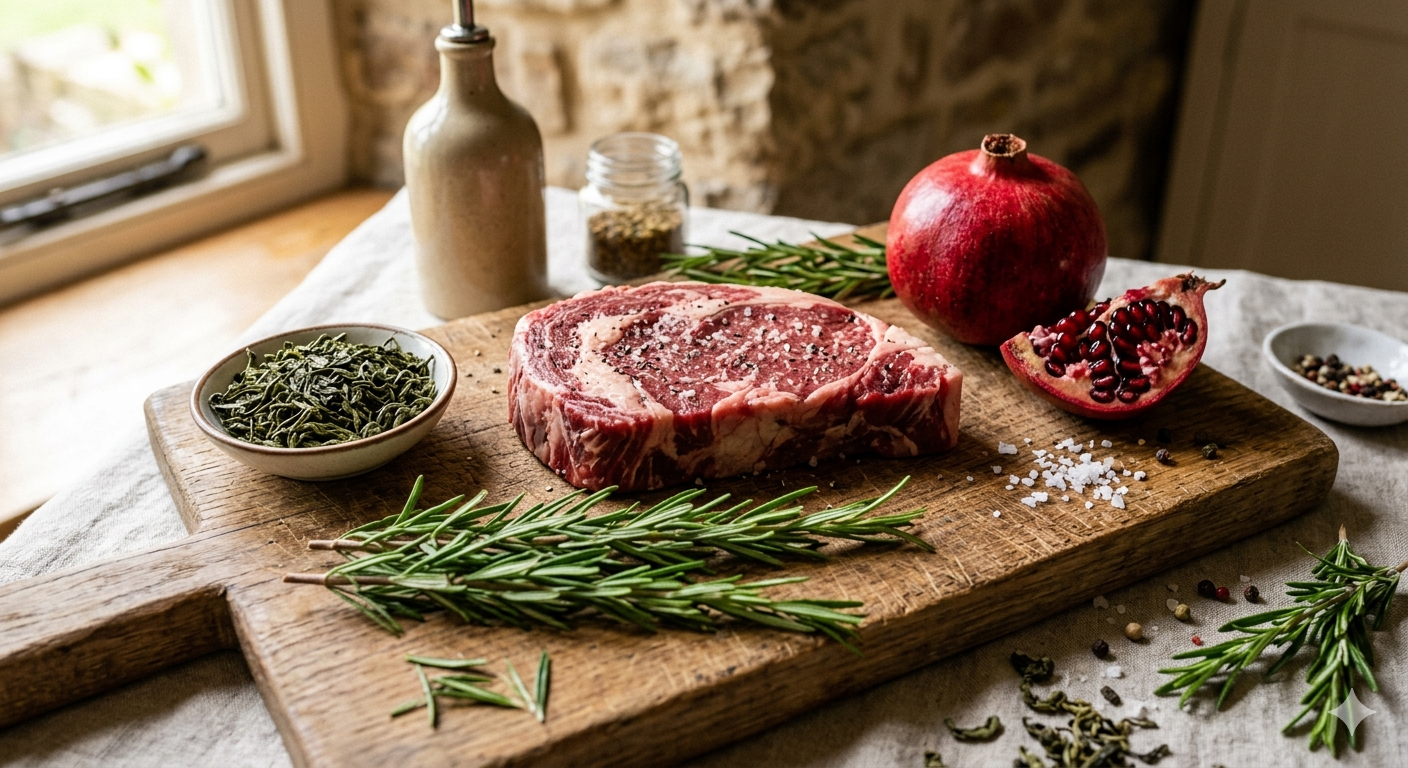
Nitrites are widely used in the meat industry to stabilise colour and ensure microbiological safety of products; however, potential health risks associated with their use necessitate the search for safer alternatives. This study aimed to evaluate the effectiveness of plant extracts (rosemary, green tea, and pomegranate), containing bioactive compounds with antioxidant properties, in minced meat matrices as factors capable of slowing oxidative processes and influencing microbiological and quality parameters of the products. Pork minced meat samples were treated with aqueous-alcoholic extracts of rosemary, green tea and pomegranate at concentrations of 0.3–0.5 %, stored at +4 °C for 21 days and analysed for microbiological indicators, colour parameters, sensory characteristics and level of lipid oxidation. Among the extracts tested, rosemary (0.5 %) showed the highest efficacy: the number of microorganisms after 21 days was 2.8×10⁴ colony-forming units per gram (compared to 3.2×10⁴ in the control; p < 0.05), the level of malondialdehyde decreased by 33 % (1.2 ± 0.1 mg/kg), and the red hue (a* = 9.5 ± 0.2) remained stable. Green tea extract (0.3 %) and pomegranate extract (0.4 %) reduced lipid oxidation by 22 % and 11 %, respectively, but had a smaller effect on colour retention. The sensory evaluation results showed that rosemary extract received better scores for aroma (8.7 ± 0.4/10) and overall acceptability (8.9 ± 0.3/10), while pomegranate extract received mixed scores due to its fruity notes. No significant differences in texture were observed among the samples. These results confirm that natural antioxidants – in particular rosemary – can serve as an effective alternative to synthetic nitrates, providing microbiological stability, reducing oxidation and maintaining consumer-acceptable quality attributes. Practical applications include the addition of such extracts to premium meat products and their combined use to enhance the synergistic effect. This study provides a basis for the development of formulations with reduced artificial additives, in line with current trends in health and nutrition.
References
Onoprienko, O.V., Vynnyk, V.D. (2024). Use of pesticides, nitrates and nitrites in food products. In: O.O. Grigor, I.I. Osypenkova, Z.V. Bondarchuk, O.V. Batrachenko (Eds.), Integration and Innovative Directions of Food Industry Development: Materials of the Eighth International Scientific and Practical Conference, 98–100.
Ponnampalam, E.N., Kiani, A., Santhiravel, S., Holman, B.W., Lauridsen, C., Dunshea, F. R. (2022). The importance of dietary antioxidants on oxidative stress, meat and milk production, and their preservative aspects in farm animals: Antioxidant action, animal health, and product quality – Invited review. Animals, 12(23), 3279. doi: 10.3390/ani12233279.
Kaur, R., Gupta, T.B., Bronlund, J., Kaur, L. (2023). The potential of rosemary as a functional ingredient for meat products- a review. Food Reviews International, 39(4), 2212–2232. doi:10.1080/87559129.2021.1950173.
Zhang, Y., Zhang, Y., Jia, J., Peng, H., Qian, Q., Pan, Z., Liu, D. (2023). Nitrite and nitrate in meat processing: Functions and alternatives. Current Research in Food Science, 6, 100470. doi: 10.1016/j.crfs.2023.100470.
Shinkaruk, M.V., Baluk, O.O. (2021). Promising starting cultures for craft sausages. Таuridа Scientific Herald. Series: Technical Sciences, 5, 38–48. doi: 10.32851/tnv-tech.2021.5.6.
Ferysiuk, K., Wójciak, K.M. (2020). Reduction of nitrite in meat products through the application of various plant-based ingredients. Antioxidants, 9(8), 711. doi: 10.3390/antiox9080711.
Echegaray, N., Pateiro, M., Munekata, P.E., Lorenzo, J.M., Chabani, Z., Farag, M.A., Domínguez, R. (2021). Measurement of antioxidant capacity of meat and meat products: Methods and applications. Molecules, 26(13), 3880. doi: 10.3390/molecules26133880.
Ursachi, C.Ș., Perța-Crișan, S., Munteanu, F.D. (2020). Strategies to improve meat products’ quality. Foods, 9(12), 1883. doi: 10.3390/foods9121883.
Gómez, I., Janardhanan, R., Ibañez, F.C., Beriain, M.J. (2020). The effects of processing and preservation technologies on meat quality: Sensory and nutritional aspects. Foods, 9(10), 1416. doi: 10.3390/foods9101416.
Fraqueza, M.J., Laranjo, M., Elias, M., Patarata, L. (2021). Microbiological hazards associated with salt and nitrite reduction in cured meat products: Control strategies based on antimicrobial effect of natural ingredients and protective microbiota. Current Opinion in Food Science, 38, 32–39. doi: 10.1016/j.cofs.2020.10.027.
DSTU ISO 1442:2005 (2005). [Meat and meat products. Method for determining moisture content]. Nacionaljnyj standart Ukrajiny. Kyjiv: DP «UkrNDNC». (in Ukrainian).
DSTU ISO 937:2005 (2005). [Meat and meat products. Determination of nitrogen content]. Nacionaljnyj standart Ukrajiny. Kyjiv: DP «UkrNDNC». (in Ukrainian).
DSTU 8380:2015 (2015). [Meat and meat products. Method for determining the mass fraction of fat]. Nacionaljnyj standart Ukrajiny. Kyjiv: DP «UkrNDNC». (in Ukrainian).
Campolina G.A., Cardoso M.G., Rodrigues-Silva-Caetano A., Lee Nelson D, Mendes Ramos E. (2023). Essential oil and plant extracts as preservatives and natural antioxidants applied to meat and meat products: a review. Food technology and biotechnology, 61(2), 212–225. https://doi.org/10.17113/ftb.61.02.23.7883
DSTU EN ISO 4833-1:2014. (2014). Microbiology of the food chain. Horizontal method for the enumeration of microorganisms. Part 1. Colony counting at 30°C by the pour-on-plate method.
WMA Declaration of Helsinki – Ethical Principles for Medical Research Involving Human Participants. (n.d.). https://www.wma.net/policies-post/wma-declaration-of-helsinki/.
Nieto, G., Ros, G., Castillo, J. (2018). Antioxidant and antimicrobial properties of rosemary (Rosmarinus officinalis, L.): A review. Medicines, 5(3), 98. https://doi.org/10.3390/medicines5030098
Renzetti, A., Betts, J. W., Fukumoto, K., Rutherford, R. N. (2020). Antibacterial green tea catechins from a molecular perspective: Mechanisms of action and structure–activity relationships. Food & function, 11(11), 9370–9396. https://doi.org/10.1039/D0FO02054K
Chrisostomo, D. A., Pereira, J. A., Scaffa, P. M. C., Gouveia, Z., Abuna, G. F., Plotnikov, S. V., Prakki, A., Duque, C. (2025). Antibiofilm properties, cytotoxicity, and effect on protease activity of antibiotics and EGCG-based medications for endodontic purposes. Journal of Dentistry, 156, 105660. https://doi.org/10.1016/j.jdent.2025.105660
Chen, J., Liao, C., Ouyang, X., Kahramanoğlu, I., Gan, Y., Li, M. (2020). Antimicrobial activity of pomegranate peel and its applications on food preservation. Journal of Food Quality, 2020(1), 8850339. https://doi.org/10.1155/2020/8850339
Kaseke, T., Magangana, T. P., Pfukwa, T. M., Seke, F., Nxumalo, K. A., Fawole, O. A., Ain, H. B. U. (2026). Exploring the Nutritional and Biological Functions of Pomegranate Fruit–Processing By-products for Food Value Addition. In Importance of Plant Based Byproducts: Nutritional and Functional Properties. Cham: Springer Nature Switzerland. https://doi.org/10.1007/978-3-032-03503-5_3
Hadidi, M., Orellana-Palacios, J. C., Aghababaei, F., Gonzalez-Serrano, D. J., Moreno, A., Lorenzo, J. M. (2022). Plant by-product antioxidants: Control of protein-lipid oxidation in meat and meat products. Lwt, 169, 114003. https://doi.org/10.1016/j.lwt.2022.114003
Dorozhko, V., Holembovska, N., Slobodianiuk, N., Israelian, V., Stetsyuk, I., Pylypchuk, O., Omelian, A., Rudyk, Y. (2025). Enhancing fish pâté with non-traditional ingredients: maca root, broccoli, and beetroot. Scifood, 19(1), 192-207. https://doi.org/10.5219/scifood.24
Efenberger-Szmechtyk, M., Nowak, A., Czyzowska, A. (2021). Plant extracts rich in polyphenols: Antibacterial agents and natural preservatives for meat and meat products. Critical reviews in food science and nutrition, 61(1), 149–178. https://doi.org/10.1080/10408398.2020.1722060
Elgadir, M. A., Alhudhaibi, A. M., Abdallah, E. M., Adiletta, G. (2025) Plant-based preservation of meat: a critical narrative review of bioactive extracts, essential oils, and next-generation delivery systems. Front. Sustain. Food Syst. 9, 1722227. https://doi.org/10.3389/fsufs.2025.1722227
Ng, T. K., Chu, K. O., Wang, C. C., Pang, C. P. (2023). Green tea catechins as therapeutic antioxidants for glaucoma treatment. Antioxidants, 12(7), 1320. https://doi.org/10.3390/antiox12071320
Kola, A., Vigni, G., Lamponi, S., Valensin, D. (2024). Protective Contribution of Rosmarinic Acid in Rosemary Extract Against Copper-Induced Oxidative Stress. Antioxidants, 13(11), 1419. https://doi.org/10.3390/antiox13111419
Bellucci, E.R.B., Bis-Souza, C.V., Domínguez, R., Bermúdez, R., Barretto, A.C.D.S. (2022). Addition of natural extracts with antioxidant function to preserve the quality of meat products. Biomolecules, 12(10), 1506. doi: 10.3390/biom12101506.
Šojić, B., Pavlić, B., Tomović, V., Kocić-Tanackov, S., Đurović, S., Zeković, Z., Belović, M., Torbica, A., Jokanović, M., Urumović, N., Vujadinović, D., Ivić, M., Škaljac, S. (2020). Tomato pomace extract and organic peppermint essential oil as effective sodium nitrite replacement in cooked pork sausages. Food Chemistry, 330, 127202. doi: 10.1016/j.foodchem.2020.127202.
Martínez-Zamora, L., Peñalver, R., Ros, G., Nieto, G. (2021). Substitution of synthetic nitrates and antioxidants by spices, fruits and vegetables in Clean label Spanish chorizo. Food Research International, 139, 109835. doi: 10.1016/j.foodres.2020.109835.
Martínez, L., Jongberg, S., Ros, G., Skibsted, L.H., Nieto, G. (2020). Plant derived ingredients rich in nitrates or phenolics for protection of pork against protein oxidation. Food Research International, 129, 108789. doi: 10.1016/j.foodres.2019.108789.
Smaoui, S., Hlima, H. B., Tavares, L., Braïek, O. B., Ennouri, K., Abdelkafi, S., Mellouli, L., Khaneghah, A. M. (2022). Application of eco-friendly active films and coatings based on natural antioxidant in meat products: A review. Progress in Organic Coatings, 166, 106780. doi: 10.1016/j.porgcoat.2022.106780.
Awad, A.M., Kumar, P., Ismail‐Fitry, M.R., Jusoh, S., Ab Aziz, M.F., Sazili, A. Q. (2022). Overview of plant extracts as natural preservatives in meat. Journal of Food Processing and Preservation, 46(8), e16796. doi: 10.1111/jfpp.16796.
Manessis, G., Kalogianni, A.I., Lazou, T., Moschovas, M., Bossis, I., Gelasakis, A.I. (2020). Plant-derived natural antioxidants in meat and meat products. Antioxidants, 9(12), 1215. doi: 10.3390/antiox9121215.
Efenberger-Szmechtyk, M., Nowak, A., Czyzowska, A. (2021). Plant extracts rich in polyphenols: Antibacterial agents and natural preservatives for meat and meat products. Critical Reviews in Food Science and Nutrition, 61(1), 149–178. doi: 10.1080/10408398.2020.1722060.
Pini, F., Aquilani, C., Giovannetti, L., Viti, C., Pugliese, C. (2020). Characterization of the microbial community composition in Italian Cinta Senese sausages dry-fermented with natural extracts as alternatives to sodium nitrite. Food Microbiology, 89, 103417. doi: 10.1016/j.fm.2020.103417.
Khatib, N., Varidi, M.J., Mohebbi, M., Varidi, M., Hosseini, S.M.H. (2020). Replacement of nitrite with lupulon-xanthohumol loaded nanoliposome in cooked beef-sausage: Experimental and model based study. Journal of Food Science and Technology, 57, 2629–2639. doi: 10.1007/s13197-020-04299-4.
Yong, H.I., Kim, T.-K., Choi, H.-D., Jang, H.W., Jung, S., Choi, Y.-S. (2021). Clean label meat technology: Pre-converted nitrite as a natural curing. Food Science of Animal Resources, 41(2), 173. doi: 10.5851/kosfa.2020.e96.
Melios, S., Grasso, S., Bolton, D., Crofton, E. (2024). Sensory quality and consumers’ perception of reduced/free-from nitrates/nitrites cured meats. Current Opinion in Food Science, 58, 101183. doi: 10.1016/j.cofs.2024.101183.
Shi, J., Xu, J., Liu, X., Goda, A.A., Salem, S.H., Deabes, M.M., Ibrahim, M.I.M., Naguib, K., Mohamed, S.R. (2024). Evaluation of some artificial food preservatives and natural plant extracts as antimicrobial agents for safety. Discover Food, 4, 89.doi: 10.1007/s44187-024-00162-z.
Konteles, S.J., Stavropoulou, N.A., Thanou, I.V., Mouka, E., Kousiaris, V., Stoforos, G.N., Gogou, E., Giannakou-
rou, M.C. (2023). Enriching Cured meat products with bioactive compounds recovered from Rosa damascena and Rosmarinus officinalis L. distillation by-products: The pursuit of natural antimicrobials to reduce the use of nitrites. Applied Sciences, 13(24), 13085. doi: 10.3390/app132413085.
Rodrigues, A.S., Kubota, E.H., da Silva, C.G., dos Santos Alves, J., Hautrive, T.P., Rodrigues, G.S., Campagnol, P.C.B. (2020). Banana inflorescences: A cheap raw material with great potential to be used as a natural antioxidant in meat products. Meat Science, 161, 107991. doi: 10.1016/j.meatsci.2019.107991.
Totaro, M.P., Difonzo, G., Pasqualone, A., Summo, C. (2024). Physicochemical properties and sensory features of ripened, industrially prepared sausages, enriched with olive leaf extract to replace nitrite and nitrate. LWT, 196, 115852. doi: 10.1016/j.lwt.2024.115852.
Hadidi, M., Orellana-Palacios, J.C., Aghababaei, F., Gonzalez-Serrano, D.J., Moreno, A., Lorenzo, J.M. (2022). Plant by-product antioxidants: Control of protein-lipid oxidation in meat and meat products. LWT, 169, 114003. doi: 10.1016/j.lwt.2022.114003.
Andrade, M.A. (2022). Active Food Packaging Incorporating Extracts from Seaweed, Plants and Fruits By-products: Development, Characterization and Effectiveness. Coimbra: University of Coimbra https://estudogeral.uc.pt/bitstream/10316/114249/1/PhD%20Thesis_VF_F3.pdf.
Osman, A.I., Zhang, Y., Farghali, M., Rashwan, A.K., Eltaweil, A.S., Abd El-Monaem, E.M., Mohamed, I.M.A., Badr, M.M., Ihara, I., Rooney, D.W., Yap, P.S. (2024). Synthesis of green nanoparticles for energy, biomedical, environmental, agricultural, and food applications: A review. Environmental Chemistry Letters, 22, 841–887. doi: 10.1007/s10311-023-01682-3.
Downloads
Published
Issue
Section
License
Copyright (c) 2026 Oles Honchar Dnipro National University

This work is licensed under a Creative Commons Attribution 4.0 International License.
- Authors reserve the right of attribution for the submitted manuscript, while transferring to the Journal the right to publish the article under the Creative Commons Attribution License. This license allows free distribution of the published work under the condition of proper attribution of the original authors and the initial publication source (i.e. the Journal)
- Authors have the right to enter into separate agreements for additional non-exclusive distribution of the work in the form it was published in the Journal (such as publishing the article on the institutional website or as a part of a monograph), provided the original publication in this Journal is properly referenced
- The Journal allows and encourages online publication of the manuscripts (such as on personal web pages), even when such a manuscript is still under editorial consideration, since it allows for a productive scientific discussion and better citation dynamics (see The Effect of Open Access).