CHEMICAL CHARACTERISATION, BIOLOGICAL ACTIVITY AND EMULSION DOSAGE FORM DEVELOPMENT OF SPERANSKIA TUBERCULATA (BUNGE) BAILL
DOI:
https://doi.org/10.15421/jchemtech.v34i2.352308Keywords:
Speranskia tuberculata (Bunge) Baill.; plant extracts; analytical determination and control; LC/MS; spectrophotometry; FTIR; antibacterial and antioxidant activity; cytotoxicity; pharmaceutical development; emulsion dosage form.Abstract
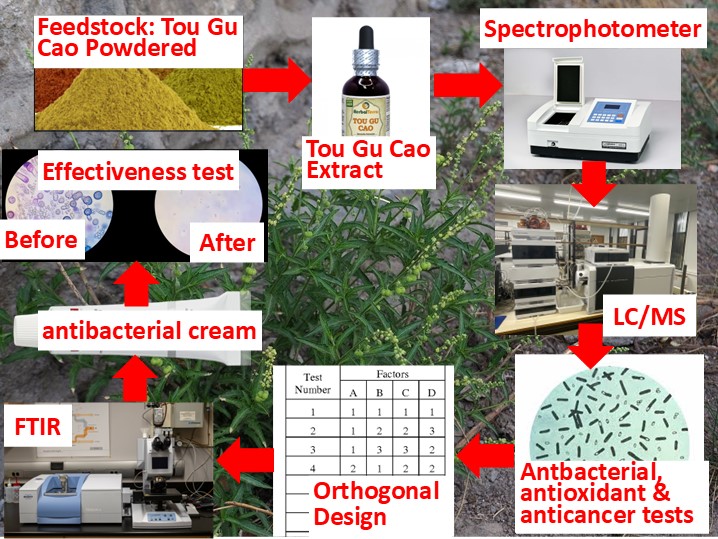
Establishing the chemical composition of Speranskia tuberculata (Bunge) Baill. extracts, their analytical characterisation, and assessment of pharmacological activity for further pharmaceutical development. Methods. Extraction of the aerial parts of the herb with four solvents (ethyl acetate, petroleum ether, n-butanol, and water) was performed. Antibacterial activity was assessed by agar diffusion method against Staphylococcus aureus, Escherichia coli and Propionibacterium acnes. Antioxidant activity was determined using DPPH and SARS tests. Cytotoxicity was assessed in four human cancer cell lines (A549, HEPG2, A375, and HeLa) using the MTT assay and IC₅₀ calculations. The chemical composition was investigated by LC/MS and spectrophotometrically to determine the total content of phenols, flavonoids, terpenoids and alkaloids. FTIR was used to control the compatibility of components during the development of the dosage form. An EA extract was used to create an emulsion cream, and the critical technological parameters were assessed. The results. The chemical profile and biological activity of the extracts depend significantly on the solvent, with EA extracts showing the best indicators. The dominant plant compounds belong to phenols, flavonoids, terpenoids and alkaloids. Based on extraction and analytical screening results, the EA extract was used as an active pharmaceutical ingredient in the development of an emulsion cream. The optimal composition was determined using the orthogonal planning method, with assessment of critical quality indicators (pH, dynamic viscosity, and technological stability). FTIR testing confirmed the chemical compatibility of the components and the preservation of marker sites of polyphenolic compounds in the finished product. The cream showed pronounced antibacterial activity against Propionibacterium acnes and Staphylococcus aureus, with the optimal composition achieving the maximum effect. Conclusions. The study demonstrates an analytically controlled and technologically justified strategy for integrating plant extracts into dosage forms within the framework of chemical engineering of pharmaceutical systems.
References
Abdallah, E. M., Alhatlani, B. Y., de Paula Menezes, R. Martins, C. H. G. (2023). Back to Naature: Medicinal Plants as Promising Sources for Antibacterial Drugs in the Post-Antibiotic Era. Plants, 12, 3077. https://doi.org/10.3390/plants12173077
Nwozo, O. S., Effiong, E. M., Aja, P. M., & Awuchi, C. G. (2023). Antioxidant, phytochemical, and therapeutic properties of medicinal plants: a review. International Journal of Food Properties, 26(1), 359–388. https://doi.org/10.1080/10942912.2022.2157425
Derkach, T. M., Starikova, O.O. (2019). Variation of chemical composition of medicinal herbs of different producers. Journal of Chemistry and Technologies, 27(1), 79–91. https://doi.org/10.15421/081909
Kim, G., Gan, R.-Y., Zhang, D., Farha, A.K., Habimana. O., Mavumengwana, V., Li, H.-B., Wang, X.-H., Corke, H. (2020). Large-Scale Screening of 239 Traditional Chinese Medicinal Plant Extracts for Their Antibacterial Activities against Multidrug-Resistant Staphylococcus aureus and Cytotoxic Activities. Pathogens, 9(3), 185. https://doi.org/10.3390/pathogens9030185
Li, Y.-M., Zhao, Y.-Y., Fan, Y.-B., Wang, X. Cai, L. N. (1997). Flavonoids from Speranskia Tuberculata. Journal of Chinese Pharmaceutical Sciences, 6, 70–74.
Zhou, Y. X., Wang, S. J., Li, Y., Xia, W., Meng, X. Y., Peng, C. (2015). Evaluation of analgesic, anti-inflammatory and antipyretic activities of the ethanol extract from Speranskia tuberculate. African Journal of Traditional, Complementary and Alternative Medicines, 12(3) 4954. http://dx.doi.org/10.4314/ajtcam.v12i3.6
Li, C., Zhang, C. Z., Hu, F. D. and Shi, J. G. (2000). Chemical constituents from Speranskia tuberculata (Bge.) Baill. China Journal of Chinese Materia Medica, 25(5) 291–292.
Mazzio, E., Badisa, R., Mack, N., Deiab, S. and Soliman, K.F.A. (2014). High Throughput Screening of Natural Products for Anti-mitotic Effects in MDA-MB-231 Human Breast Carcinoma Cells. Phytotherapy Research, 28, 856–867. https://doi.org/10.1002/ptr.5065
Sun, Z., Derkach, T. M. (2024). Biologically active compounds in the extracts from the Speranskia Tuberculata (Bunge) Baill herb and their effect on the viability of cancer cells of five different lines. Pharmaceutical Review, 1(69), 23–34. https://doi.org/10.11603/2312-0967.2024.1.14441
Dai, Z., Liao, X., Wieland, X. L., Hu, J., Wang, Y. G., Kim, T.-H., Liu, J.-P., Zhan, S., Robinson, N. (2022). Cochrane systematic reviews on traditional Chinese medicine: What matters–the quantity or quality of evidence? Phytomedicine, 98, 153921. https://doi.org/10.1016/j.phymed.2021.153921
Mazzio, E., Soliman, K. (2009). In vitro screening for the tumoricidal properties of international medicinal herbs. Phytotherapy Research, 23(3), 385–398. https://doi.org/10.1002/ptr.2636
Jo, H.-G., Seo, J., Choi, S., Lee, D. (2022). East Asian herbal medicine to reduce primary pain and adverse events in cancer patients: A systematic review and meta-analysis with association rule mining to identify core herb combination. Frontiers in Pharmacology, 12, 800571. https://doi.org/10.3389/fphar.2021.800571
Niwano, Y., Saito, K., Yoshizaki, F., Kohno, M., Ozawa, T. (2011). Extensive screening for herbal extracts with potent antioxidant properties. Journal of Clinical Biochemistry and Nutrition, 48(1), 78–84. https://doi.org/10.3164/jcbn.11-013FR
Mazzio, E., Deiab, S., Park, K., Soliman, K. (2013). High throughput Screening to Identify Natural Human Monoamine Oxidase B Inhibitors. Phytotherapy Research, 27(6), 818–828. https://doi.org/10.1002/ptr.4795
El-Shibiny, A., Tan, S., Nair, D. N., Padmavathy, S. (2014). Impact of Endophytic Microorganisms on Plants, Environment and Humans. The Scientific World Journal, 2014. https://doi.org/10.1155/2014/25069
Yu, S., Yan, H., Zhang, L., Shan, M., Chen, P., Ding, A.,
Li, S. F. Y. (2017). A review on the phytochemistry, pharmacology, and pharmacokinetics of amentoflavone, a naturally-occurring biflavonoid. Molecules, 22(2), 299. https://doi.org/10.3390/molecules22020299
Li, Y., Xie, Y., He, Y., Hou, W., Liao, M., Liu, C. (2019). Quality markers of traditional Chinese medicine: Concept, progress, and perspective. Engineering (Beijing, China), 5(5), 888–894. doi:10.1016/j.eng.2019.01.015
Li, Y., Shen, Y., Yao, C.-L., Guo, D.-A. (2020). Quality assessment of herbal medicines based on chemical fingerprints combined with chemometrics approach: A review. Journal of Pharmaceutical and Biomedical Analysis, 185, 113215. doi:10.1016/j.jpba.2020.113215
Derkach, T. M. (2021). The origin of misconceptions in inorganic chemistry and their correction by computer modelling. Journal of Physics. Conference Series, 1840(1), 012012. https://doi.org/10.1088/1742-6596/1840/1/012012
Xu, K., Hao, T., Wang, H., Zheng, X., Yao, X., Li, J., Zhang, Y., Liu, Z. (2025). Experimental and theoretical study on the hydrogen evolution inhibition performance of Herba Speranskia tuberculata extract on Al alloy waste dust. Journal of Environmental Chemical Engineering, 13(1), 115262. doi:10.1016/j.jece.2024.115262
Gulcin, İ., Alwasel, S. H. (2023). DPPH Radical Scavenging Assay. Processes, 11(8), 2248. https://doi.org/10.3390/pr11082248
Andrés, C. M. C., Pérez de la Lastra, J. M., Andrés Juan, C., Plou, F. J., Pérez-Lebeña, E. (2023). Superoxide Anion Chemistry—Its Role at the Core of the Innate Immunity. International Journal of Molecular Sciences, 24(3), 1841. https://doi.org/10.3390/ijms24031841
van Meerloo, J., Kaspers, G. J. L., Cloos, J. (2011). Cell Sensitivity Assays: The MTT Assay. In: Cree, I. A. (eds) Cancer Cell Culture: Methods and Protocols, 731, 237–245. Humana Press. https://doi.org/10.1007/978-1-61779-080-5_20
Aryal, S., Baniya, M. K., Danekhu, K., Kunwar, P., Gurung, R., & Koirala, N. (2019). Total Phenolic Content, Flavonoid Content and Antioxidant Potential of Wild Vegetables from Western Nepal. Plants (Basel, Switzerland), 8(4), 96. https://doi.org/10.3390/plants8040096
Wang, P., Wang, Y.-H., Li, H., Lai, A.-P.-H., Gao, H. (2020). Correlation between the Content Total Flavonoids and Total Polyphenols in Loquat Nuclear with Different Extracts and Their Antioxidant Activities. Chemical Reagents, (9), 1067–1072. https://doi.org/10.13822/j.cnki.hxsj.2020007520
Nicolescu, A., Bunea, C. I., Mocan, A. (2025). Total flavonoid content revised: An overview of past, present, and future determinations in phytochemical analysis. Analytical Biochemistry, 700, 115794. https://doi.org/10.1016/j.ab.2025.115794.
Yang, Y., Peng, X.-M., Ju, R.-J., Yang, S.-M., You, C.-C., Guan, J. (2024). Antioxidant activity of different polar parts of Paeonia Lactiflora and correlation with total terpene content. Modern Chemical Industry, 44(2), 109-112. https://doi.org/10.1.16606/j.cnki.issn0253-4320.2024.02.021
Zhang, R.-R., Lu, D.-Y., Yang, Z.-Y., Zhao, W., But, P. P.-H., Shaw, P.-C., Jiang, R.-W., Ma, Z.-G. (2015). Simultaneous quantification of six alkaloid components from commercial stemonae radix by solid phase extraction-high-performance liquid chromatography coupled with evaporative light scattering detector. Pharmacognosy Magazine, 11(42), 360–367. https://doi.org/10.4103/0973-1296.153090
Lang, Y., Gao, N., Zang, Z., Meng, X., Lin, Y., Yang, S., Yang, Y., Jin, Z., Li, B. (2024). Classification and antioxidant assays of polyphenols: a review. Journal of Future Foods, 4(3), 193–204. https://doi.org/10.1016/j.jfutfo.2023.07.002
Casciaro, B., Mangiardi, L., Cappiello, F., Romeo, I., Loffredo, M. R., Iazzetti, A., Calcaterra, A., Goggiamani, A., Ghirga, F., Mangoni, M. L., Botta, B., Quaglio, D. (2020). Naturally-occurring alkaloids of plant origin as potential antimicrobials against antibiotic-resistant infections. Molecules, 25(16), 3619. https://doi.org/10.3390/molecules25163619
Zhang, G., Yang, Y., Memon, F. U., Hao, K., Xu, B., Wang, S., Wang, Y., Wu, E., Chen, X., Xiong, W., Si, H. (2021). A natural antimicrobial agent: Analysis of antibacterial effect and mechanism of compound phenolic acid on Escherichia coli based on tandem mass tag proteomics. Frontiers in Microbiology, 12, 738896. https://doi.org/10.3389/fmicb.2021.738896
Sun, Z., Derkach, T. M. (2024). Bioactive Compounds Extracted from the Herb Speranskia Tuberculata (Bunge) Baill. Journal of Chemistry and Technologies, 32(3), 580–590. https://doi.org/10.15421/jchemtech.v32i3.305125
Politis, S. N., Colombo, P., Colombo, G., Rekkas, D. M. (2017). Design of experiments (DoE) in pharmaceutical development. Drug Development and Industrial Pharmacy, 43(6), 889–901. https://doi.org/10.1080/03639045.2017.1291672
Baertschi, S. W., Alsante, K. M., Reed, R. A. (Eds). (2024). Pharmaceutical stress testing (2nd edn). doi:10.3109/9781439801802
Rowe, R. C., Sheskey, P. J., Quinn, M. E. (2009). Handbook of Pharmaceutical Excipients (6th ed.). Pharmaceutical Press.
Downloads
Published
Issue
Section
License
Copyright (c) 2026 Oles Honchar Dnipro National University

This work is licensed under a Creative Commons Attribution 4.0 International License.
- Authors reserve the right of attribution for the submitted manuscript, while transferring to the Journal the right to publish the article under the Creative Commons Attribution License. This license allows free distribution of the published work under the condition of proper attribution of the original authors and the initial publication source (i.e. the Journal)
- Authors have the right to enter into separate agreements for additional non-exclusive distribution of the work in the form it was published in the Journal (such as publishing the article on the institutional website or as a part of a monograph), provided the original publication in this Journal is properly referenced
- The Journal allows and encourages online publication of the manuscripts (such as on personal web pages), even when such a manuscript is still under editorial consideration, since it allows for a productive scientific discussion and better citation dynamics (see The Effect of Open Access).