IMMOBILIZATION OF BIOACTIVE COMPOUNDS IN XANTHAN-BASED HYDROGELS: MECHANISMS, PRACTICAL APPROACHES AND CONCEPTS FOR THE DEVELOPMENT OF INNOVATIVE MATERIALS
DOI:
https://doi.org/10.15421/jchemtech.v34i1.355044Keywords:
xanthan gum; hydrogels; immobilization; ionic interactions; coordination interactions; bioactive compounds; innovative materials.Abstract
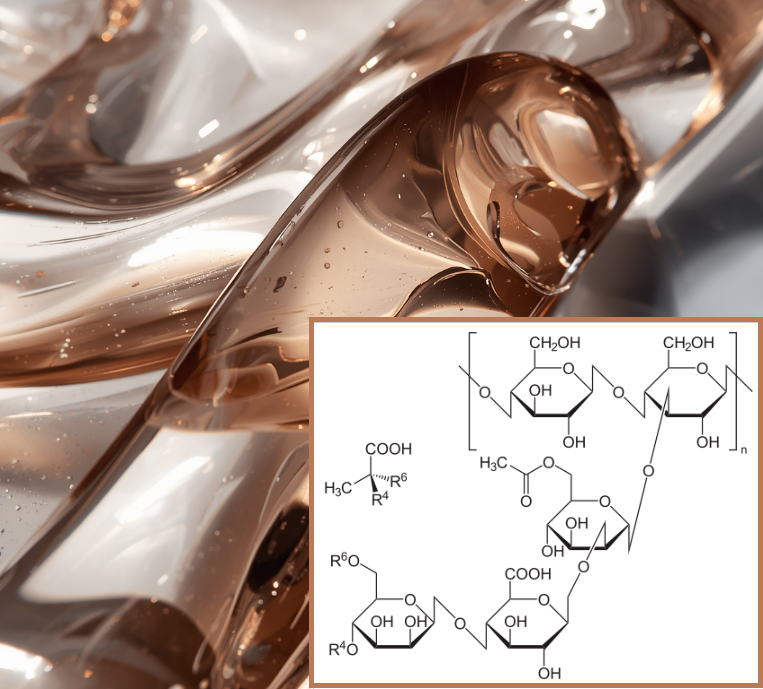
The paper summarizes current approaches to the development of xanthan (XG)-oriented immobilization systems that ensure effective retention of bioactive compounds and heavy metal ions as bioactive toxicants. For the first time, the features of the formation of “xanthan–(modifier)–immobilization object” systems are considered. It is established that non-covalent interactions play a key role in the stabilization of immobilized objects. It is shown that the carboxyl, pyruvate, acetyl, and hydroxyl groups of xanthan provide effective interaction with cations of both biogenic and toxic metals, as well as with protonated functional groups of bioactive (including pharmaceuticals) and toxic (including dyes) compounds, ensuring their reliable retention within a three-dimensional hydrogel matrix. Such a structure creates prerequisites for controlled release and targeted delivery of bioactive substances, as well as for the binding and subsequent biodegradation of toxicants. The paper presents a classification of immobilization types based on retention mechanisms. The key role of ion-exchange immobilization in forming a porous polymer network capable of physically retaining additionally introduced molecules bioactive molecules is highlighted. The prospects for the application of such systems in pharmaceutical technologies and environmental processes are analyzed. Special attention is paid to composite materials with magnetic nanoparticles, which enable controlled transport and recovery of immobilized components. Previously, we established the absence of a unified protocol for quantum chemical modeling (QCM) as a tool for predicting interactions in “xanthan (modifier)–immobilization object” systems. Therefore, this study substantiates the feasibility of applying QCM methods, in particular for determining stable conformations and identifying active binding sites. It is shown that the lack of such studies limits the systematization of results, necessitating the development of standardized approaches based on simplified structural fragments. The proposed approaches provide a theoretical framework for the targeted design of innovative functional materials.
References
Metin, A. Ü., Horzum, N., Dağcı, A., & Savaş, A. T. (2025). Xanthan gum-based Magnosorbent: A selective, rapid, and high-capacity adsorbent for pH-tolerant methylene blue removal from complex pollutant systems. International Journal of Biological Macromolecules, 328(Pt 2), 147640. https://doi.org/10.1016/j.ijbiomac.2025.147640
Prabhakar, T., Giaretta, J., Zulli, R., Rath, R. J., Farajikhah, S., Talebian, S., & Dehghani, F. (2025). Covalent immobilization: A review from an enzyme perspective. Chemical Engineering Journal, 503, 158054. https://doi.org/10.1016/j.cej.2024.158054
Okovytyy, S. I., Kondratiuk, N. V., & Polyvanov, Y. A. (2025). Xanthan: Research into innovative modification strategies and industrial applications. Journal of Chemistry and Technologies, 33(4), 1232–1251. https://doi.org/10.15421/jchemtech.v33i4.350021
Kang, M., Oderinde, O. K., Liu, S., Huang, Q., Ma, W., Yao, F., & Fu, G. (2019). Characterization of Xanthan gum-based hydrogel with Fe³⁺ ions coordination and its reversible sol-gel conversion. Carbohydrate Polymers, 203, 139–147. https://doi.org/10.1016/j.carbpol.2018.09.044
Jaipal, A., Pandey, M. M., Abhishek, A., Vinay, S., & Charde, S. Y. (2013). Interaction of calcium sulfate with xanthan gum: Effect on in vitro bioadhesion and drug release behavior from xanthan gum based buccal discs of buspirone. Colloids and Surfaces B: Biointerfaces, 111, 644–650. https://doi.org/10.1016/j.colsurfb.2013.06.052
Dzionek, A., Wojcieszyńska, D., & Guzik, U. (2022). Use of xanthan gum for whole cell immobilization and its impact in bioremediation - a review. Bioresource Technology, 351, 126918. https://doi.org/10.1016/j.biortech.2022.126918
Dário, A. F., Hortêncio, L. M., Sierakowski, M. R., Neto, J. C. Q., & Petri, D. F. S. (2011). The effect of calcium salts on the viscosity and adsorption behavior of xanthan. Carbohydrate Polymers, 84(1), 669–676. https://doi.org/10.1016/j.carbpol.2010.12.047
Ko, M.-S., Jeon, Y.-J., & Kim, K.-W. (2022). Novel application of xanthan gum-based biopolymer for heavy metal immobilization in soil. Journal of Environmental Chemical Engineering, 10(5), 108240. https://doi.org/10.1016/j.jece.2022.108240
Balíková, K., Farkas, B., Matúš, P., & Urík, M. (2022). Prospects of biogenic xanthan and gellan in removal of heavy metals from contaminated waters. Polymers, 14(23), 5326. https://doi.org/10.3390/polym14235326
Ahmad, R., & Mirza, A. (2018). Application of xanthan gum/n-acetyl cysteine modified mica bionanocomposite as an adsorbent for the removal of toxic heavy metals. Groundwater for Sustainable Development, 7, 101–108. https://doi.org/10.1016/j.gsd.2018.03.010
Rahmatpour, A., & Alizadeh, A. H. (2024). Biofilm hydrogel derived from physical crosslinking (self-assembly) of xanthan gum and chitosan for removing Cd²⁺, Ni²⁺, and Cu²⁺ from aqueous solution. International Journal of Biological Macromolecules, 266(Pt 2), 131394. https://doi.org/10.1016/j.ijbiomac.2024.131394
He, S., Chen, J., et al. (2024). Green preparation of regenerable biohybrids with xanthan gum-stabilized biogenic mackinawite nanoparticles for efficient treatment from high-concentration uranium wastewater. Bioresource Technology, 408, 131104. https://doi.org/10.1016/j.biortech.2024.131104
Ghubayra, R., Mousa, M., et al. (2024). Fabrication and characterization of xanthan gum nanofibers reinforced with thiosemicarbazide: adsorption of Pb²⁺ from an aqueous medium. RSC Advances, 14, 37859–37870. https://doi.org/10.1039/d4ra06364c
Ribeiro, M., Boudoukhani, M., et al. (2021). Xanthan-Fe₃O₄ nanoparticle composite hydrogels for non-invasive magnetic resonance imaging and magnetically assisted drug delivery. ACS Applied Nano Materials, 4(8), 7712–7725. https://doi.org/10.1021/acsanm.1c00932
Bueno, P. V. A., Hilamatu, K. C. P., Carmona-Ribeiro, A. M., & Petri, D. F. S. (2018). Magnetically triggered release of amoxicillin from xanthan/Fe₃O₄/albumin patches. International Journal of Biological Macromolecules, 115, 792–800. https://doi.org/10.1016/j.ijbiomac.2018.04.119
Koyuncu, I., Yavuzturk Gul, B., Esmaeili, M. S., et al. (2022). Modification of PVDF membranes by incorporation Fe₃O₄@Xanthan gum to improve anti-fouling, anti-bacterial, and separation performance. Journal of Environmental Chemical Engineering, 10(3), 107784. https://doi.org/10.1016/j.jece.2022.107784
Peng, X., Xu, F., Zhang, W., et al. (2014). Magnetic Fe₃O₄@silica–xanthan gum composites for aqueous removal and recovery of Pb²⁺. Colloids and Surfaces A: Physicochemical and Engineering Aspects, 443, 27–36. https://doi.org/10.1016/j.colsurfa.2013.10.062
Singh, N. S. S., Gataa, I. S., Saleh, L. H., et al. (2026). Design and immobilized gold nanoparticles into the chitosan-xanthan gum polymers as a novel catalyst for efficient nitroarenes reduction in water. Journal of Organometallic Chemistry, 1043, 123902. https://doi.org/10.1016/j.jorganchem.2025.123902
Inamuddin, & Ahamed, M. I. (2018). Xanthan gum/titanium dioxide nanocomposite for photocatalytic degradation of methyl orange dye. International Journal of Biological Macromolecules, 124, 1–10. https://doi.org/10.1016/j.ijbiomac.2018.10.064
Virzì, N. F., Diaz-Rodriguez, P., et al. (2025). Combining antibacterial and wound healing features: Xanthan gum/guar gum 3D-printed scaffold tuned with hydroxypropyl-β-cyclodextrin/thymol and Zn²⁺. Carbohydrate Polymers, 351, 123069. https://doi.org/10.1016/j.carbpol.2024.123069
Yahoum, M. M., Toumi, S., Tahraoui, H., et al. (2023). Formulation and evaluation of xanthan gum microspheres for the sustained release of metformin hydrochloride. Micromachines, 14(3), 609. https://doi.org/10.3390/mi14030609
Laffleur, F., & Michalek, M. (2017). Modified xanthan gum for buccal delivery—A promising approach in treating sialorrhea. International Journal of Biological Macromolecules, 102, 1250–1256. https://doi.org/10.1016/j.ijbiomac.2017.04.123
Mikac, U., et al. (2019). Dynamics of water and xanthan chains in hydrogels studied by NMR relaxometry and their influence on drug release. International Journal of Pharmaceutics, 563, 373–383. https://doi.org/10.1016/j.ijpharm.2019.04.014
Chang, Y.-T., Wang, S.-H., Tsai, M.-S., et al. (2019). Preparation and physicochemical and cytocompatibility analyses of a magnetic polymer colloid of xanthan gum-chitosan/nickel nanowires. Results in Physics, 13, 102224. https://doi.org/10.1016/j.rinp.2019.102224
Zheng, M., Lian, F., Xiong, Y., Liu, B., Zhu, Y., Miao, S., Zhang, L., & Zheng, B. (2019). The synthesis and characterization of a xanthan gum-acrylamide-trimethylolpropane triglycidyl ether hydrogel. Food Chemistry, 272, 574–579. https://doi.org/10.1016/j.foodchem.2018.08.083
Wang, B., et al. (2016). In vitro and in vivo evaluation of xanthan gum–succinic anhydride hydrogels for the ionic strength-sensitive release of antibacterial agents. Journal of Materials Chemistry B, 4, 1853–1861. https://doi.org/10.1039/C5TB02046H
Huang, S., An, S., Ramesh Kannan, P., et al. (2025). Development and characterization of biodegradable antibacterial hydrogels of xanthan gum for controlled ciprofloxacin release. International Journal of Biological Macromolecules, 309(Pt 1), 142637. https://doi.org/10.1016/j.ijbiomac.2025.142637
Layek, B. (2024). A comprehensive review of xanthan gum-based oral drug delivery systems. International Journal of Molecular Sciences, 25(18), 10143. https://doi.org/10.3390/ijms251810143
Sharma, A., Thatai, K. S., Kuthiala, T., Singh, G., & Arya, S. K. (2021). Employment of polysaccharides in enzyme immobilization. Reactive and Functional Polymers, 167, 105005. https://doi.org/10.1016/j.reactfunctpolym.2021.105005
Prabhakar, T., Giaretta, J., Zulli, R., et al. (2025). Covalent immobilization: A review from an enzyme perspective. Chemical Engineering Journal, 503, 158054. https://doi.org/10.1016/j.cej.2024.158054
Method of immobilizing biochemically active substance with xanthan gum (1990). Method of immobilizing biochemically active substance with xanthan gum. US Patent US4954443A.
Xu, W., Lou, Y., Xu, B., et al. (2018). Mineralized calcium carbonate/xanthan gum microspheres for lysozyme adsorption. International Journal of Biological Macromolecules, 120(Pt B), 2175–2179. https://doi.org/10.1016/j.ijbiomac.2018.09.041
Ribeiro, E. S., Machado, B. R., de Farias, B. S., et al. (2025). Bi-layer nanocapsules based on chitosan and xanthan gum for lipase immobilization. Journal of Molecular Liquids, 434, 128031. https://doi.org/10.1016/j.molliq.2025.128031
Tapdigov, S. Z. (2021). The bonding nature of the chemical interaction between trypsin and chitosan based carriers in immobilization process depend on entrapped method: A review. International Journal of Biological Macromolecules, 183, 1676–1696. https://doi.org/10.1016/j.ijbiomac.2021.05.059
Dumitriu, S., & Chornet, E. (1997). Immobilization of xylanase in chitosan–xanthan hydrogels. Biotechnology Progress, 13(5), 539–545. https://doi.org/10.1021/bp970059i
Sheikhzadeh, S., Khaledabad, M. A., & Almasi, H. (2025). In situ growth of β-galactosidase-manganese hybrid nanoflower on polycaprolactone/xanthan electrospun nanofibers: A novel nanobiocatalyst for efficient lactose hydrolysis. Journal of Agriculture and Food Research, 22, 102058. https://doi.org/10.1016/j.jafr.2025.102058
Hassanisaadi, M., Vatankhah, M., Kennedy, J. F., Rabiei, A., & Saberi Riseh, R. (2025). Advancements in xanthan gum: A macromolecule for encapsulating plant probiotic bacteria with enhanced properties. Carbohydrate Polymers, 348(Pt A), 122801. https://doi.org/10.1016/j.carbpol.2024.122801
Dingley, C., Cass, P., Adhikari, B., & Daver, F. (2024). Application of superabsorbent natural polymers in agriculture. Journal of Plastic Film & Sheeting, 40(1), 3–45. https://doi.org/10.1177/20412479231226166
Belguesmia, Y., Rabesona, H., Mounier, J., Pawtowsky, A., Le Blay, G., Barbier, G., Haertlé, T., & Chobert, J.-M. (2014). Characterization of antifungal organic acids produced by Lactobacillus harbinensis K.V9.3.1Np immobilized in gellan–xanthan beads during batch fermentation. Food Control, 36(1), 205–211. https://doi.org/10.1016/j.foodcont.2013.08.028
Jalili, H., et al. (2011). Unstructured model for free and immobilized cell culture of Bifidobacterium animalis. Biochemical Engineering Journal, 58-59, 120–128. https://doi.org/10.1016/j.bej.2011.09.007
Chen, L., Yang, T., Song, Y., Shu, G., & Chen, H. (2017). Effect of xanthan-chitosan-xanthan double layer encapsulation on survival of Bifidobacterium BB01 in simulated gastrointestinal conditions, bile salt solution and yogurt. LWT – Food Science and Technology, 81, 274–280. https://doi.org/10.1016/j.lwt.2017.04.005
Sun, W., & Griffiths, M. W. (2000). Survival of bifidobacteria in yogurt and simulated gastric juice following immobilization in gellan–xanthan beads. International Journal of Food Microbiology, 61(1), 17–25. https://doi.org/10.1016/S0168-1605(00)00327-5
Ramisetti, P., & Muchahary, S. (2025). Enhancing probiotic viability in synbiotic beverages: Functional role of xanthan gum. Food and Humanity, 5, 100943. https://doi.org/10.1016/j.foohum.2025.100943
Wang, M., Sun, R., Zeng, L., Du, S., Fang, Y., Zhuang, B., Yuan, B., & Jin, Y. (2026). Resistant dextrin/xanthan gum gels protect probiotics for application to ionizing radiation shielding. Food Research International, 227, 118191. https://doi.org/10.1016/j.foodres.2025.118191
Hong, H., Churchman, J., Gu, Y., Yin, K., & Wang, C. (2012). Kaolinite–smectite mixed-layer clays in the Jiujiang red soils and their climate significance. Geoderma, 173-174, 75–83. https://doi.org/10.1016/j.clay.2011.12.006 (примітка: журнал Applied Clay Science, але DOI веде на Geoderma-подібний запис)
Chen, J., Wang, S., Ji, Z., Yi, X., Guo, J., Jin, G., & Wu, Z. (2025). Inhibition mechanisms of xanthan gum on high-dose gallic acid-induced functional deterioration of myofibrillar protein: Focusing on gelling and emulsification behaviors. Carbohydrate Polymers, 368(Pt 1), 124096. https://doi.org/10.1016/j.carbpol.2025.124096
Raschip, I. E., Platon, I.-V., Fifere, N., Darie-Nita, R.-N., & Dinu, M. V. (2025). Stabilization of anthocyanins in xanthan-based systems for synergistic cryogels with enhanced physicochemical and biological properties for visual freshness monitoring of Prussian carp (Carassius gibelio). Food Hydrocolloids, 168, 111566. https://doi.org/10.1016/j.foodhyd.2025.111566
Raschip, I. E., Fifere, N., et al. (2020). Development of antioxidant and antimicrobial xanthan-based cryogels with tuned porous morphology and controlled swelling features. International Journal of Biological Macromolecules, 156, 608–620. https://doi.org/10.1016/j.ijbiomac.2020.04.086
Cai, X., Du, X., Cui, D., Wang, X., Yang, Z., & Zhu, G. (2019). Improvement of stability of blueberry anthocyanins by carboxymethyl starch/xanthan gum combinations microencapsulation. Food Hydrocolloids, 91, 238–245. https://doi.org/10.1016/j.foodhyd.2019.01.034
Li, Y., Yin, Y., Jia, N., Yu, J., et al. (2026). Interfacial structuring and antioxidant enhancement of ... International Journal of Biological Macromolecules, 343(Pt 1), 150412. https://doi.org/10.1016/j.ijbiomac.2026.150412
Liu, C., Li, Y., Liang, R., Sun, H., Wu, L., Yang, C., & Liu, Y. (2023). Development and characterization of ultrastable emulsion gels based on synergistic interactions of xanthan and sodium stearoyl lactylate. Food Chemistry, 400, 133957. https://doi.org/10.1016/j.foodchem.2022.133957
Pispas, I., Pavlova, E., Slouf, M., & Papagiannopoulos, A. (2025). Xanthan-based nanocomplexes: modulating colloidal properties, model compound encapsulation and mucoadhesion via diethylaminoethyl dextran. International Journal of Biological Macromolecules, 329(Pt 1), 147766. https://doi.org/10.1016/j.ijbiomac.2025.147766
Patel, R., Tosif, M. M., Alsaidan, O. A., & Prajapati, B. (2025). Xanthan gum-based formulations for additive manufacturing: Scientific developments in drug delivery and biomedical applications. Carbohydrate Polymers, 366, 123914. https://doi.org/10.1016/j.carbpol.2025.123914
Mittal, H., Al Alili, A., Morajkar, P. P., & Alhassan, S. M. (2021). Graphene oxide crosslinked hydrogel nanocomposites of xanthan gum for the adsorption of crystal violet dye. Journal of Molecular Liquids, 323, 115034. https://doi.org/10.1016/j.molliq.2020.115034
Abu Elella, M. H., Goda, E. S., Gamal, H., El-Bahy, S. M., et al. (2021). Green antimicrobial adsorbent containing grafted xanthan gum/SiO₂ nanocomposites for malachite green dye. International Journal of Biological Macromolecules, 191, 385–395. https://doi.org/10.1016/j.ijbiomac.2021.09.040
Metin, A. Ü., Horzum, N., Dağcı, A., & Savaş, A. T. (2025). Xanthan gum-based Magnosorbent: A selective, rapid, and high-capacity adsorbent for pH-tolerant methylene blue removal from complex pollutant systems. International Journal of Biological Macromolecules, 328(Pt 2), 147640. https://doi.org/10.1016/j.ijbiomac.2025.147640
Chen, W., Wang, X., Liang, H., Li, J., & Li, B. (2026). Xanthan gum alters the mucosal adhesion performance of konjac glucomannan through an entropy loss-type network entrapment mechanism. Food Chemistry, 510, 148660. https://doi.org/10.1016/j.foodchem.2026.148660
Downloads
Published
Issue
Section
License
Copyright (c) 2026 Oles Honchar Dnipro National University

This work is licensed under a Creative Commons Attribution 4.0 International License.
- Authors reserve the right of attribution for the submitted manuscript, while transferring to the Journal the right to publish the article under the Creative Commons Attribution License. This license allows free distribution of the published work under the condition of proper attribution of the original authors and the initial publication source (i.e. the Journal)
- Authors have the right to enter into separate agreements for additional non-exclusive distribution of the work in the form it was published in the Journal (such as publishing the article on the institutional website or as a part of a monograph), provided the original publication in this Journal is properly referenced
- The Journal allows and encourages online publication of the manuscripts (such as on personal web pages), even when such a manuscript is still under editorial consideration, since it allows for a productive scientific discussion and better citation dynamics (see The Effect of Open Access).