REACTIVE EXTRUSION OF POLY(ETHYLENE TEREPHTHALATE): A REVIEW
DOI:
https://doi.org/10.15421/jchemtech.v34i1.343141Keywords:
reactive extrusion; poly(ethylene terephthalate); chain extender; nucleating agent; structure-directing agent.Abstract
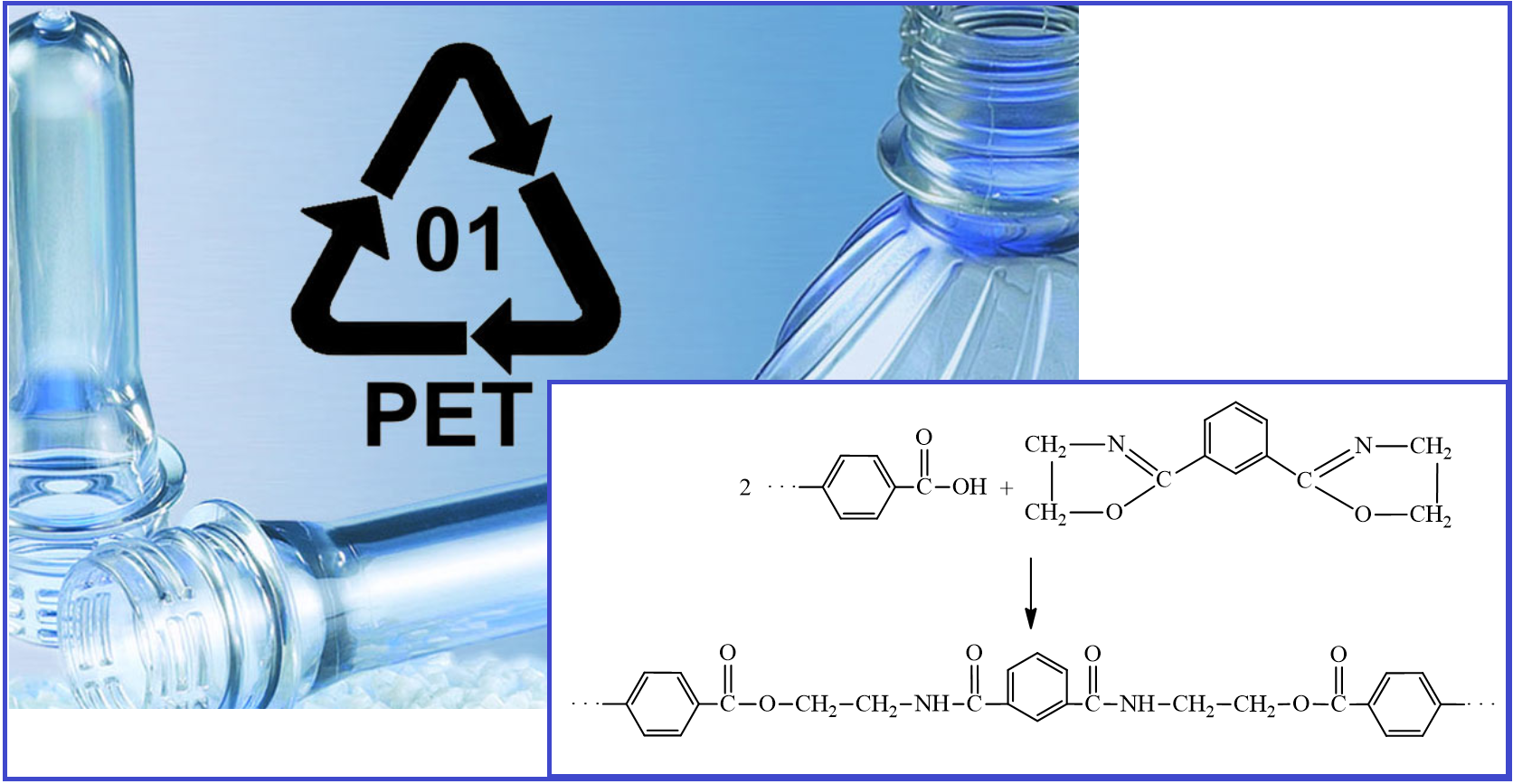
This review provides a comprehensive analysis of modern scientific and practical approaches to reactive extrusion (REX) of polyethylene terephthalate (PET) - a method that allows integrating the stages of synthesis, modification and processing of the material in a single high-performance technological process. A wide range of chemical agents is considered, including di- and polyepoxides, isocyanates, dianhydrides, bisoxazolines, biscaprolactams and organic phosphites, which act as chain extenders and promoters of chemical modification reactions of PET. The mechanisms of interaction of these reagents with carboxyl and hydroxyl end groups of the polymer, which are formed as a result of its thermal and hydrolytic degradation, are considered in detail. The influence of each type of modifier on the increase in molecular weight, change in melt flow index, rheological characteristics and complex of physicomechanical properties of the material is analyzed. Particular emphasis is placed on the use of structure-forming agents (nucleators) and reactive impact modifiers to optimize the supramolecular structure and overcome the natural brittleness of PET. The work systematizes the literature data and experimental experience of the article authors on the restoration of the properties of secondary PET and formulates recommendations for the selection of optimal systems for obtaining high-quality polymer matrices for engineering plastics and polymer composite materials based on them.
References
Awaja, F., & Pavel, D. (2005). Recycling of PET. European Polymer Journal, 41(7), 1453–1477. https://doi.org/10.1016/j.eurpolymj.2005.04.017
Beyer, G., & Hopmann, C. (2017). Reactive extrusion: Principles and applications. Wiley-VCH.
Mohsin, M. A., Abdulrehman, T., & Haik, Y. (2017). Reactive extrusion of polyethylene terephthalate waste and investigation of its thermal and mechanical properties after treatment. International Journal of Chemical Engineering, 2017, 5361251. https://doi.org/10.1155/2017/5361251
Jamalzadeh, M., & Sobkowicz, M. J. (2024). Reactive extrusion of post-irradiated PET to improve interfacial interactions in compounding with immiscible polyethylene blends. Polymer Engineering & Science. https://doi.org/10.1002/pen.26659
Lambla, M. (1992). Reactive extrusion: A new tool for the diversification of polymeric materials. In Rheological Fundamentals of Polymer Processing (pp. 437–454). Springer. https://doi.org/10.1007/978-94-015-8571-2_20
Awaja, F., Daver, F., Kosior, E., & Cser, F. (2004). The effect of chain extension on the thermal behaviour and crystallinity of reactive extruded recycled PET. Journal of Thermal Analysis and Calorimetry, 78(3), 865–884. https://doi.org/10.1007/s10973-004-0454-z
Koning, C. E., Van Duin, M., Pagnoulle, C., & Jerome, R. (1998). Strategies for compatibilization of polymer blends. Progress in Polymer Science, 23(4), 707–757. https://doi.org/10.1016/S0079-6700(97)00054-3
Vachon, A., Pépin, K., Balampanis, E. (2017). Compatibilization via reactive extrusion: Comparison of coupling agents. Journal of Polymers and the Environment, 25(3), 812–827. https://doi.org/10.1007/s10924-016-0860-x
Serralta-Macias, J. J., Tapia-Picazo, J. C. (2025). Analysis of recycled PET for production of polyester fiber. Fibers and Polymers, 26(1), 73–88. https://doi.org/10.1007/s12221-024-00777-0
Scheirs, J., & Long, T. E. (Eds.). (2004). Modern polyesters: Chemistry and technology of polyesters and copolyesters. John Wiley & Sons. https://doi.org/10.1002/0470090685
Wu, R., Chen, K., Xin, C., He, Y., & Ren, F. (2025). Effect of chain extender combination modification on PET properties. Journal of Beijing University of Chemical Technology, 52(3), 88–95. https://doi.org/10.13543/j.bhxbzr.2025.03.009
Bocz, K., Molnár, B., Marosi, G., & Ronkay, F. (2018). Preparation of low-density microcellular foams from recycled PET modified by SSP and chain extension. Journal of Polymers and the Environment, 26(3), 1234–1246. https://doi.org/10.1007/s10924-018-1351-z
Chervakov, D. O., Sukhyy, K. M., Chervakov, O. V., & Sverdlikovska, O. S. (2023). A modern understanding of polyethyleneterephthalate: The degradation processes. Journal of Chemistry and Technologies, 31(3), 522–529.
Chervakov, D. O., Sukhyy, K. M., Chervakov, O. V., Varlan, K. Y., & Sverdlikovska, O. S. (2024). The influence of polyethyleneterephthalate solid-state polycondensation on its crystallization and molecular weight increase. Journal of Chemistry and Technologies, 32(3), 145–156. https://doi.org/10.15421/jchemtech.v32i3.304394
Wu, R., Chen, K., Xin, C., He, Y., & Ren, F. (2023). Topological structure chain extension modification of polyethylene terephthalate (PET) and its rheological behavior and foaming properties. Advanced Textile Technology, 31(5), 86–95. https://doi.org/10.12477/xdfzjs.20230510
Odet, F., Ylla, N., Delage, K., & Cassagnau, P. (2022). Influence of chain extenders on recycled standard and opaque PET rheology and melt-spun filament properties. ACS Applied Polymer Materials, 4(6), 3884–3896. https://doi.org/10.1021/acsapm.2c01231
Rimar, M., Chervakov, D., Fedak, M., Kulikov, A., Kulikova, O., Sukhyy, K., & Prokopenko, O. (2023). Solid-phase polycondensation of polyethylene terephthalate with technologies of its reactive extrusion. MM Science Journal. https://doi.org/10.17973/MMSJ.2023_10_2023096
Paleos, C. M. (1999). Chain extension of poly(ethylene terephthalate) by reactive blending using diepoxides. Journal of Applied Polymer Science, 71(13), 2121–2127. https://doi.org/10.1002/(SICI)1097-4628(19990328)71:13
Gao, J., Wang, K., Xu, N., Li, L., Ma, Z., Zhang, Y., & Li, T. (2023). Influence of a multiple epoxy chain extender on the rheological behavior, crystallization, and mechanical properties of polyglycolic acid. Polymers, 15(13), 2764. https://doi.org/10.3390/polym15132764
Bimestre, B. H., & Saron, C. (2012). Chain extension of poly(ethylene terephthalate) by reactive extrusion with secondary stabilizer. Materials Research, 15(3), 467–472. https://doi.org/10.1590/S1516-14392012005000058
Zhao, Z., Wu, Y., Wang, K., & et al. (2020). Effect of a trifunctional chain extender on intrinsic viscosity, crystallization behavior, and mechanical properties of PET. ACS Omega, 5(30), 19247–19254. https://doi.org/10.1021/acsomega.0c02815
Muobom, S., Lee, J. E., Hong, J. S., Kim, D. H., & Ahn, K. H. (2023). Mechanical degradation of PET and its structural modification by chain extender. Korean Journal of Chemical Engineering, 40, 1123–1135. https://doi.org/10.1007/s13367-023-00059-w
León-Albiter, N., Santana, O. O., Martinez-Orozco, L., Candau, N., & Maspoch, M. L. (2024). Performance of recycled opaque PET modified by reactive extrusion. Polymers, 16(19), 2843. https://doi.org/10.3390/polym16192843
Sinco Engineering S.p.A. (1997). Polyester resins having improved rheological properties (European Patent No. EP 0801108 A2). European Patent Office.
World Intellectual Property Organization. (2005). Molecular weight increase and modification of polycondensates (International Publication No. WO 2005/030834 A1).
Rauwendaal, C. (1986). Polymer extrusion. Hanser.
Tzoganakis, C., Vlachopoulos, J., Hamielec, A., & Shinozaki, D. (1989). Effect of molecular weight distribution on the rheological and mechanical properties of polypropylene. Polymer Engineering and Science, 29(6), 390–396. https://doi.org/10.1002/pen.760290607
Incarnato, L., Scarfato, P., Di Maio, L., & Acierno, D. (2000). Structure and rheology of recycled PET modified by reactive extrusion. Polymer, 41(18), 6825–6831. https://doi.org/10.1016/S0032-3861(00)00032-X
Härth, M., & Dörnhöfer, A. (2020). Film blowing of linear and long-chain branched poly(ethylene terephthalate) modified by reactive extrusion with chain extenders including pyromellitic dianhydride. Polymers, 12(7), 1605. https://doi.org/10.3390/polym12071605
Xia, T., Xi, Z., Liu, T., Pan, X., Fan, C., & Zhao, L. (2015). Melt foamability of reactive extrusion-modified poly(ethylene terephthalate) with pyromellitic dianhydride using supercritical carbon dioxide as blowing agent. Polymer Engineering and Science, 55(7), 1528–1535. https://doi.org/10.1002/pen.23995
Szymczak, P., Dziadowiec, D., Andrzejewski, J., & Szostak, M. (2023). The efficiency evaluation of the reactive extrusion process for polyethylene terephthalate (PET). Monitoring of the industrial foil manufacturing process by in-line rheological measurements. Applied Sciences, 13(6), 3434. https://doi.org/10.3390/app13063434
Raffa, P., Coltelli, M. B., Savi, S., Bianchi, S., Castelvetro, V. (2012). Chain extension and branching of poly(ethylene terephthalate) (PET) with di- and multifunctional epoxy or isocyanate additives: An experimental and modelling study. Reactive and Functional Polymers, 72(1), 50–60. https://doi.org/10.1016/j.reactfunctpolym.2011.10.007
Abdelwahab, M. A., Khan, A., Matuana, L. M., Auras, R., & Rabnawaz, M. (2022). Polystyrene-free chain extenders for recycled poly(ethylene terephthalate). ACS Applied Polymer Materials, 4(12), 9272–9283. https://doi.org/10.1021/acsapm.2c01544
Yan, H., Yuan, H., Gao, F., Zhao, L., & Liu, T. (2015). Modification of poly(ethylene terephthalate) by combination of reactive extrusion and followed solid-state polycondensation for melt foaming. Journal of Applied Polymer Science, 132(21), 42708. https://doi.org/10.1002/app.42708
Karl, C. W., Arstad, B., Shamsuyeva, M., Lecinski, J., Olafsen, K., Larsen, Å. G., & Comerford, J. (2024). Upgrading and enhancement of recycled polyethylene terephthalate with chain extenders: In-depth material characterization. Industrial & Engineering Chemistry Research, 63(28), 12277–12287. https://doi.org/10.1021/acs.iecr.4c00018
Can, S., Karsli, N. G., Yesil, S., & Aytac, A. (2016). Improving the properties of recycled PET/PEN blends by using different chain extenders (including phenylene di-isocyanate). Journal of Polymer Engineering, 36(6), 615–624. https://doi.org/10.1515/polyeng-2015-0268
Cheng, X., Ma, H., & Qin, W. (2021). Study on chain extension and viscosity modification of recycled PET with hexamethylene-1,6-diisocyanate and other extenders. New Chemical Materials, 49(2), 244–248. https://doi.org/10.19817/j.cnki.issn1006-3536.2021.02.056
Milliken & Company. (2015). Hyperform HPN 900ei: Processing guide and effects on PET [Technical Bulletin].
Clariant. (2018). Licomont CaV 101: Usage and performance in PET [Technical Data Sheet].
Baoxu Chemical. (2019). BX NA series: Application notes for PET nucleation [Product Sheet].
World Health Organization. (1999). Hydrogen cyanide and cyanide salts: Environmental Health Criteria.
Buccella, M., Dorigato, A., Pasqualini, E., Caldara, M., & Fambri, L. (2014). Chain extension behavior and thermo-mechanical properties of polyamide 6 chemically modified with 1,1′-carbonyl-bis-caprolactam. Polymer Engineering & Science, 54(1), 158–165. https://doi.org/10.1002/pen.23547
Tahmasebi, F., Jafari, S. H., & Farnia, S. M. F. (2023). SbB-g-GMA copolymer as a dual functional reactive compatibilizer and impact modifier for potential recycling of PET and PS via melt blending approach. Journal of Polymers and the Environment, 31, 3106–3119. https://doi.org/10.1007/s10924-023-02803-3
Cavalcanti, F. N., Teófilo, E. T., Rabello, M. S., & Silva, S. M. L. (2007). Chain extension and degradation during reactive processing of PET in the presence of triphenyl phosphite. Polymer Engineering & Science, 47(12), 2155–2163. https://doi.org/10.1002/pen.20912
Qin, D., Wang, C., Wang, H., & Jiang, X. (2016). Chain extension and thermal behavior of recycled poly(ethylene terephthalate) modified by reactive extrusion with triphenyl phosphite. MATEC Web of Conferences, 67, 06052. https://doi.org/10.1051/matecconf/20166706052
Dias, M. L., & Silva, A. P. F. (2000). Transesterification reactions in triphenyl phosphite–additivated PET/PEN blends. Journal of Polymer Engineering, 20(2), 143–152. https://doi.org/10.1515/POLYENG.2000.20.2.143
Slezák, E., Ronkay, F., & Bocz, K. (2023). Development of an engineering material with increased impact strength and heat resistance from recycled PET. Journal of Polymers and the Environment, 31, 5296–5308. https://doi.org/10.1007/s10924-023-02945-4
DuPont. (2020). Elvaloy PTW: Properties and application notes [Technical Bulletin].
Arkema. (2019). Lotader AX series: Reactive terpolymers for compatibilization [Technical Bulletin].
Kraton Polymers. (2018). Kraton FG1901: Performance data and applications [Technical Bulletin].
Mitsui Chemicals. (2017). Tafmer MA performance in PET blends [Technical Bulletin].
DuPont. (2016). BYNEL series: Adhesive and compatibilizer grades [Technical Bulletin].
Westlake. (2015). Epolene G: Application as maleated polyethylene wax [Product Note].
Alzahrani, M., Alhumade, H., Simon, L., Yetilmezsoy, K., Madhuranthakam, C. M. R., & Elkamel, A. (2023). Additive manufacture of recycled poly(ethylene terephthalate) using pyromellitic dianhydride targeted for FDM 3D-printing applications. Sustainability, 15(6), 5004. https://doi.org/10.3390/su15065004
Ma, L., Mao, F., Wu, Y., Peng, Y., Luo, F., & Wen, J. (2025). Revisiting polymer crystallization kinetics: Experimental validation of the Mo equation for modified PET systems. Frontiers in Materials, 12. https://doi.org/10.3389/fmats.2025.1619133
Sugeno, K., & Saito, H. (2024). Double spherulite formation via two-step crystallization in PTT/PET blends. Polymers, 16(23), 3357. https://doi.org/10.3390/polym16233357
Sugeno, K., & Saito, H. (2024). Change in concentration of amorphous region due to crystallization in PTT/PET miscible blends. Polymers, 16(16), 2332. https://doi.org/10.3390/polym16162332
Li, F., Suzuki, R., Gao, T., Xia, X., Isono, T., & Satoh, T. (2023). Alkali metal carboxylates: Simple, efficient, and industrial relevant catalysts for controlled polymer synthesis. Bulletin of the Chemical Society of Japan, 96(9), 1003–1018. https://doi.org/10.1246/bcsj.20230149
Wu, J., Zhao, Q., Shi, D., He, Y., Miao, Z., Xie, H., Zhang, Y. (2025). Depolymerization of polyesters by in situ generated alkali metal alkoxides. Green Chemistry, 24. https://doi.org/10.1039/D5GC00664C
Barman, S., Theravalappil, R., Maity, N., Jaseer, E. A., Garcia, N., & Musa, A. (2024). Efficient PET depolymerization using cost-effective alkali and alkaline earth metal-based salts for high monomer yield. Macromolecular Chemistry and Physics. Advance online publication. https://doi.org/10.1002/macp.202400316
Downloads
Published
Issue
Section
License
Copyright (c) 2026 Oles Honchar Dnipro National University

This work is licensed under a Creative Commons Attribution 4.0 International License.
- Authors reserve the right of attribution for the submitted manuscript, while transferring to the Journal the right to publish the article under the Creative Commons Attribution License. This license allows free distribution of the published work under the condition of proper attribution of the original authors and the initial publication source (i.e. the Journal)
- Authors have the right to enter into separate agreements for additional non-exclusive distribution of the work in the form it was published in the Journal (such as publishing the article on the institutional website or as a part of a monograph), provided the original publication in this Journal is properly referenced
- The Journal allows and encourages online publication of the manuscripts (such as on personal web pages), even when such a manuscript is still under editorial consideration, since it allows for a productive scientific discussion and better citation dynamics (see The Effect of Open Access).